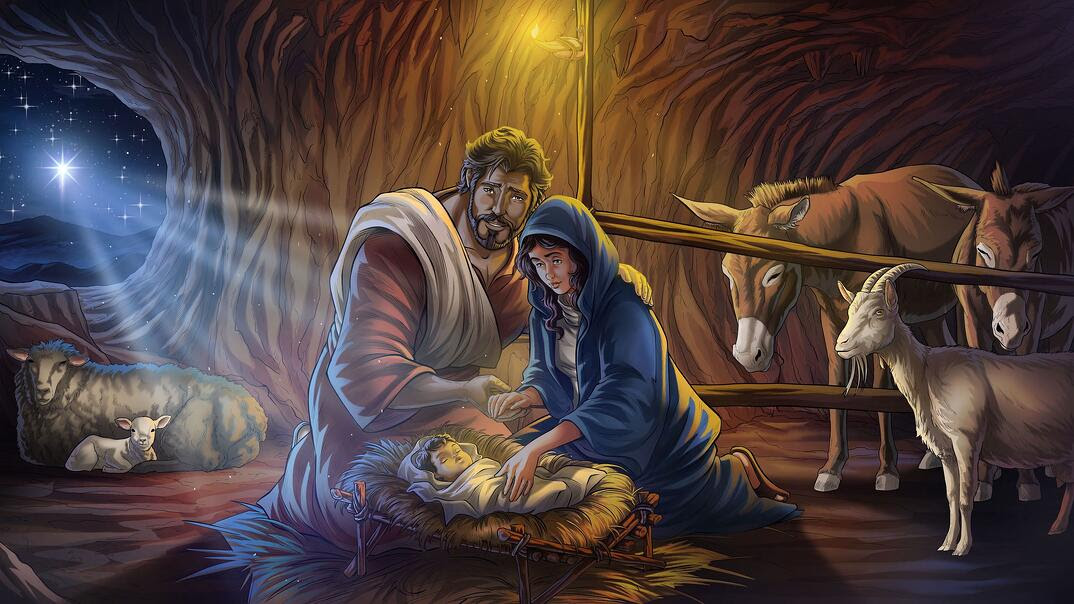
Christmas is Popular

By David Pellowe of The Good Sauce

iBible 2022, RevelationMedia

Nearly every Australian can’t wait to put up their lights and decorations.

Retailers rush to sell them as early as possible, and tell us all it’s Christmas.

Of course, no one actually says it’s the celebration of the birth of God’s Anointed One, His Divine Son clothed in humanity, born in poverty to a working class family in Roman-occupied Judea-Samaria.

‘Progressives’ have helped us move on from anything anchored in history.

No commercial or official public observation of the season acknowledges the profoundly spiritual significance, and the fulfilment of the long-prophesied life and mission of Jesus the Christ.

Secularists have helped us vandalise the transcendent and scorn anything incomprehensible without the supernatural.

The nations which officially celebrate His birth with two extra days off work or penalty rates — a social phenomenon repeated again to remember His sacrificial death — don’t get much reminder of the morally crucial reasons for Christmas, or the pointed lessons we should take from it.

Yet we live in a culture which boasts of its ability to achieve moral excellence without a Moral Law Giver, and proceeds to take great pride in all kinds of immorality and ethical relativism.

Christmas should make intellectually honest people so incredibly uncomfortable they demand a resolution to the neo-liberal hypocrisies Christmas exposes.

Instead, we lie about the meaning of Christmas, and fill each other’s heads with all kinds of warm and fuzzy distractions to drown out the voice that won’t go away, that voice which never quits whispering, “God is real, and worse, you desperately need Him!”

Anything but the Truth at Christmas.

Here are three culturally confronting things everybody should remember every time they see a Christmas coverup like reindeer, elves, gingerbread houses, toy soldiers or “happy holidays”.

 “Peace on earth”

When Jesus came to earth the first time, it was as a servant on a mission to solve a problem.

The problem was there was no possibility of peace between humanity and God.

The solution was always going to be Jesus giving His life 33 years later in the place of you and me to satisfy divine justice for our multiple moral failures and restore the possibility of peace between us and God.

It was knowing this that a vast, heavenly army of angels appeared to the shepherds the night of His birth announcing, “Glory to God in the highest, and on earth peace among people with whom He is pleased!”

Not coincidentally, those shepherds worked in the village where lambs were specifically born and raised for future sacrifice in the temple for people’s sins, according to Jewish law.

This pointed to the purpose of Christ’s birth and life mission, and so the meaning of Christmas.

The culturally confronting lesson here is one Jesus later taught, and that is that everyone “who does not believe has been condemned already, because he has not believed in the name of the one and only Son of God.”

The Good News of Christmas is that’s not the end of the story, but just the beginning.

God saw us already condemned, and sent His Son to earth to be born miraculously and to miraculously make peace possible between us and God.

 “Wise men with three gifts”

No, there weren’t three wise men, or three kings, and they didn’t visit baby Jesus in the manger.

A class of wise men and priests who were astrologers, also known as “magi”, traveled from the Persian kingdoms of the Middle East, a few years after Jesus was born.

There’s no way such wealthy elites would have risked traveling in a small group of three, and it’s implausible their caravan would have brought small quantities of gifts to present to Someone they described as “born King” Who they came to worship.

They brought three types of gifts, and instead of teddy bears, baby rattles or toys, each of the gifts was prophetically symbolic of the significance of this unique child’s birth and life mission.

Gold, frankincense and myrrh were extremely precious gifts, more helpful for a king than a baby.

Gold certainly symbolised Christ’s royalty and is easily recognised as bestowing great honour as well as wealth on what was probably previously a not so well off family.

It’s unlikely they tossed Him their spare change in coins.

Frankincense is an aromatic resin that was more expensive in those days than the average home could afford to use as air freshener in the out house.

It was used in Persia as incense in ceremonial worship of a deity.

In this way, the magi demonstrated their understanding of not only Jesus’ royalty, but His Divinity.

Myrrh was used in the ancient world as a perfume and anointing oil, and was also used in healing.

Most importantly as it relates to the meaning of Christmas, it was an ingredient in the mixture of spices which was used to prepare bodies for burial.

These gifts together indicate that the Divine King of the Universe humbled Himself as humanity with a mission to give His life to save the world.

Christmas is not about whatever you want it to be about.

 “Santa Claus”

Santa’s name, adapted over various cultures to modern sounds we find harder to understand in English, was actually Saint Nicholas.

Say that with an exaggerated Scandinavian accent out loud and you may see the similarity, depending on how well you do Swedish impersonations.

Saint Nicholas was the Christian Bishop of Myra, in modern-day Turkey, about 300 years before imperialist Islam was invented.

History tells how he was born to wealthy parents, gave away all his wealth to the poor and oppressed, and was jailed just for being Christian.

Santa Claus was the first pro-life Christian activist.

Upon his release from jail, he preached against killing unwanted babies, a common practice then too.

Many babies were conceived in sexual rituals at the Temple of Diana.

Locals eventually pulled down and destroyed the pagan temple, convicted by Santa’s preaching.

I love Santa Claus: a real, historic person and an unapologetic, public Christian whose love for Jesus confronted and helped change culture.

We need more culture warriors like him today!

Far from letting Santa distract you or your kids from the real meaning of Christmas, let his story remind you that Jesus was born, lived and died to destroy the curse of sin and evil.

His sacrificial death then invited people around the world to peace: restored friendship with God in such a way that it lifts up people and nations brave enough to confront their sinfulness.

The lessons Christmas teaches our culture is that we’re not okay.

We’re sin-infected and already condemned without the opportunity Christmas represents to make peace with God, as the angels testified to shepherds who knew exactly the blood price which sin demands.

It teaches that Jesus was not just a man, but the Divine King of Kings Whose birth was the beginning of a mission to die so that we might have eternal life.

Christmas is not just a time for family and penalty rates, prawns and backyard cricket.

Santa teaches us it’s a confronting celebration of the One Who has the power to shatter false religions and calibrate cultures to the Kingdom of God.

His Gospel brings hope for real justice, liberty, peace and mercy to citizens and societies that are willing to honestly hear the sermon of Santa’s life: the real meaning of Christmas to culture.

REVOLUTIONIZE” your Christian walk

By Andrew Strom.

Practical steps that will “REVOLUTIONIZE” your Christian walk:

For many years now I have studied the accounts of past Revivals
and Revivalists. But when you study this topic, one of the things
you see very quickly is that we in the church today are living well
below the level of Christianity that should be considered ‘normal’.
(-Even a lot of “Spirit-filled” believers today). When you see what
kind of Gospel was preached and what kind of Christian life was
lived in the Revival days of old, you start to hunger for that kind of
Christianity again. And you start to see that there is a kind-of
“Revived” life that is very attainable for us all today – but so few
are walking in it – or are even told that it exists.

In many ways, what I am talking about is the ‘Normal’ Christian
life. It is nothing else but the “new creation” life found in Romans
chapters 6 – 8. There is nothing “amazing” about it at all. Yet it is
so far above the kind of Christianity that we have been led to
expect, that many think it “unattainable”. How very sad – because
it is the free gift of God to us all.

Is it possible to walk before God in a constant state of being
‘clean’ before Him – and knowing it? Is it possible to walk with a
truly pure heart and clean conscience as our “normal” state –
every day? Is it possible to live in true victory over sin – at a
practical level? Is it possible to have the strongholds of sin and
pride in our fallen nature so dealt-with that they hardly bother us at all?

The answer to these questions is ‘Yes’. And one of the key things
that our website has to be about, is how to come into this kind of
Christianity – how to literally have a “personal Revival”.

STEP ONE – MAKE a “LIST”

As all Scripture and Revival history shows – a true Revival begins
with “Deep Repentance”. And in our personal lives, it so often
begins with making a “list” – literally – of ANY sin or compromise
or “cloud” that is in our life – and confessing those sins to God
with real sorrow and repentance. Any person who cannot make a
‘LIST’ like that – and spend time confessing their sins before God
(-and forsaking them!) – is not really serious about becoming
‘Revived’. This is the first place to start.

In fact, please stop reading this right now. Please find a piece of
paper and write down a List of every sin or ‘doubtful’ thing in your
life. Ask God to “shine His light” into your heart and show you
everything that you need to repent of. Then simply get alone with
Him and go through that List – repenting of each thing one by one –
deeply confessing and forsaking them before the Lord.

I believe a lot of people will have a “Personal Revival” just through
doing that! -In fact, I know of many people who have literally been
‘revived’ through this simple process. So please – DO IT NOW! This
first step is so important that I do not believe there is any point
reading further until you have gone through it.

THEN – “WALKING” in it:

Now, after you have been through this Repentance process, what
you are left with is a CLEAN CONSCIENCE. [-This is assuming
that you have already been through the other basic steps found in
Romans 6 – 8. ie. WATER-BAPTISM (-a “death” to the old life)
and also RECEIVING THE HOLY SPIRIT (-without which we do
not have the ‘POWER’ to walk in a truly ‘Revived’ state). Please
see my other articles for more on these two steps if you need to].

Assuming that you have these basic things in place, and that you
have now REPENTED DEEPLY by confessing your sins to God
one by one, you should now sense a RENEWED COMMUNION
with God through having a totally CLEAN CONSCIENCE before
Him. Is that what you are sensing?

The Bible speaks many times of having a conscience that is
“sprinkled clean” by God. -And what a precious thing this is! In
fact, it is fair to say that the Christian life consists of- (1) GETTING
a clean conscience, and (2) KEEPING it clean! -It is pretty much
as simple as that!

So how do you “walk” in a ‘Revived’ state before God? -Simply by
walking in a way that KEEPS YOUR CONSCIENCE CLEAN. That
is what Romans 8 is all about! -That is what 1 John 3 is all about!
-Keeping your heart PURE before God. -Getting a clean
conscience and WALKING IN IT – by the power of the Holy Spirit.

Special blessings to all.

Teresa: Living Godly

People are often unreasonable, illogical and self-centered;

Forgive them anyway.

If you are kind, people may accuse you of selfish, ulterior motives;

Be kind any way.

If you are successful, you will win some false friends and some true enemies;

Succeed anyway.

If you are honest and frank, people may cheat you;

Be honest and frank anyway.

What you spend years building, someone may destroy overnight;

Build anyway.

If you find serenity and happiness, they may be jealous;

Be happy anyway.

The good you do today, people will often forget tomorrow;

Do good anyway.

Give the world the best you have, and it may never be enough;

Give the world the best you have anyway.

You see, in the final analysis, it is all between you and God;

It was never between you and them anyway.

Your Greatest Days Are Before You

DARE TO BELIEVE! By Veronika West August 24, 2022

Dare to believe!

by Veronika West August 26, 2022

“Why so down cast, My Beloved? As if a dark cloud of Unbelief and Fear has descended upon you.

Behold, I AM not a God who is distant or unapproachable, uninterested, or too busy to give you My full Attention.

No! I AM not deaf to your cries or blind to your needs. I AM a Loving Father who is near to those who draw near to Me.

Look! I have unlimited resources available for all My Children. I know no limitation or lack.

The Righteous will never beg for bread, but will always have more than enough. Super-abundance, awaits those who wait expectantly on Me.

See! In the midst of darkness, I AM Light! In War and Conflict, I AM Peace. In a world full of hatred and evil doers, I AM Love and I AM Good, full of tender Mercy and Loving Kindness.

In times of grief, I AM Comfort and Strength. In loneliness and isolation, My Radiant Presence is all that you need.

Beloved, My watchful Eye is always upon you, for I have hidden you from your enemies and shielded you from their vicious attacks.

Under the Shadow of My Wing, you are protected from the heat of the noonday sun and preserved from every danger that lurks in darkness.

So Lift up your head that hangs low, and look only to Me. Lean on Me, and I will be an ever-present Helper.

Even My Angels stand ready to go forth to War for you; to prepare a way for you; to level the Mountains and fill in the valleys.

Let your heart Rejoice, for the Battle is already Won and the Victory is assured!

Ha! Yes, I laugh at your enemies. Come up higher, and you will laugh at your enemies too.

You will see that those who think they are winning, are actually losing, and the gallows they have built for another, shall become the place for their own demise and destruction.

Watch! Soon and very soon, they will have enough rope for their own hanging. Who do they think they are, as if the breathe in their lungs were given to them by man?

My Heart is grieved, for the hearts of men are truly wicked, all day long. Yet in My great Mercy, I AM still mindful of them, waiting for their hearts to turn in true Repentance for their wicked deeds.

tipping point

But surely I tell you, the Bowls of their Iniquity are now at a Divine Tipping Point. My patience will soon run out, and My Justice and Judgments will not be restrained forever.

Suddenly, swiftly and quickly, as if a light switch was flicked on, I shall come with My Vengeance and with My Glory, and The Spirit of The Fear of The LORD shall grip their wicked hearts, and their stiff necks shall be broken, and many will fall as dead men in their tracks.

I shall not be mocked!

Therefore Warriors, do not grow weary in your Prayers and Petitions, day and night, for My Courts are now in Session and I sit as a Righteous Judge over The Nations.

Watch! For have I not said, that in these last days I shall perform the same Miracle that I did at first?

Yes! Water shall be turned to Wine, for I AM not governed by time.

hourglass graphic

Look! A Kairos Time, for now the Archangel with the Hourglass in his hand stands before you, and The Nations of the Earth, holding the Sands of Time.

Watch and Listen, as a Divine Acceleration, Acceleration, Acceleration, begins to take place!

Watch! As I take you back to your future, Divine Reversals, as Generational Curses shall be reversed and Covenant Blessings shall be released

Nations that have been held captive shall be let go — for surely, I stand over My Word to perform it!

As I send it out, it always, always produces fruit — and fruit that shall remain.

Yes! It will accomplish all I want it to, and it will prosper everywhere I send it.

Oh Beloved, if only you had a greater understanding of My Ways and My Thoughts, then you would be at Peace and great expectation would fill your hearts.

You would walk in such Power and Authority, nothing would weigh you down or distract you from the purposes for which I created you.

What time is wasted by worry and anxiety, as if the spirit of fear can change anything!

My Beloved, you need a deeper Revelation of the Perfect and Complete Love that I have for you, then, and only then, will you become unstoppable, a True Warrior who strikes fear in the heart of the enemy, and a real and present danger to the kingdom of darkness, and you will become as the Violent, who will take the kingdom by force.

Beloved, I have fashioned you for War, and made you a weapon in My great Arsenal.

As you position yourself in Me, and place your life in My Hands, fully yielded and surrendered to My Way and Will, you will live in the fullest of blessing and My highest purpose!

Will you dare to believe, that surely I have kept the best for last, and that your greatest days are before you?”

Paul, the Thessalonians and the Coming of Jesus

The apostle Paul, writing about 51 AD to believing Christians living in the Roman city of Thessalonica, expected with them, an imminent, soon return of the Lord. How can I say this?

That’s easy: Paul wrote that these Thessalonian believers had ‘turned from idols to serve the living God and to wait for his son from heaven(see 1 Thessalonians 1:10).

Please read that again. Paul believed they (and Paul himself) were waiting for Jesus to come from heaven. Let the implications of that sink in. Yair I know. That’s a challenge.

As we read this letter today, bear in mind we are reading mail written to believers living 2000 years ago.

We must resist the temptation to think we are being addressed by Paul or by the Holy Spirit.

This was not about us!

Let me ask you, who still await Jesus’ coming, a very important question.

Do you really, seriously, logically imagine that those same real believers who eagerly read Paul’s words, were then terribly disappointed because as they continued to notice others of their community, one by one, passing away while Jesus still had not come, as Paul said!

If Jesus still had not come then–which is what many modern believers seem to hold—and when the last one of those original Thessalonian believers would have passed away, can you imagine the consternation, the feelings of utter despair and loss of trust in God that would have followed?

Today, some 2000+ years have passed since those original Thessalonian believers were alive. So if you hold the view that Jesus is yet to appear a second time, then their faith must have been totally in vain.

Totally in vain.

Come on. Think about it for a minute: If Jesus’ coming was near for these believers, it cannot be near for us, can it? And if Jesus’ coming is still coming near for us today, you must conclude Paul was in gross error.

Do you see the problem? Your problem?

Ask yourself this question: if those Thessalonians were wrong by expecting Jesus to come within their lifetime, why didn’t Paul correct them? Why didn’t he write ‘no, you’ve got it wrong, Jesus won’t be coming for a long, long, time!’

But Paul did not correct them, instead he continued to encourage them as he wrote this letter to encourage them and then followed it with another letter, which we call Second Thessalonians, with further encouragements.

Can you see the dilemma for you today if you are still expecting Jesus to return?

That is logically impossible if you trust Paul’s letters are the word of God.

‘This Generation’ or That?

Jesus said:

‘Assuredly I say to you, THIS generation will not pass away until all these things take place’.

Jesus spoke those unbelievable, riveting, unforgettable words directly to some of his disciples on the Mount of Olives, (Matthew 24:34, Mark 13:30, Luke 21:30).

In these passages, the context demands that he was speaking to his disciples during the week before his death and resurrection. He was not speaking to us today. That is important.

So which generation did Jesus mean? Taking the plain meaning of the text, Jesus was referring to his own generation—the generation of those he was addressing right there on the Mount of Olives.

When we read in the gospels Jesus’ words, we are committed to accepting those words as true, right?

But some scholars teach that Jesus must have meant some future generation—surely he could not have been referring to his own generation!

Thus, irrationally and against all sound hermeneutical principles, they insist he meant an unknown, vague, future generation, and they change Jesus’ word from THIS to THAT!

Why this strange interpretation? This departure from standard grammatical understanding.

Why? Of course, they have to avoid the obvious meaning because they are dogmatically committed to a future return of Jesus. They cannot bear to believe he spoke of the relative closeness of his coming.

Jesus prophesied to those disciples on the Mount of Olives, several things would have to happen before His hearers’ generation had passed away. These events included the fall of the Jerusalem temple –an astounding event, impossible for Jews to accept—but also that He would return.

Yet many of the same scholars and teachers have no problem in accepting that Jesus spoke literally about the coming fall of the Jerusalem temple. They accept that as an historical fact. Seems like they feel they have the authority to change Jesus’ words to suit their doctrine!

Think about that for a minute.

If Jesus meant to say “that generation”, indicating a future generation, the writers would have used either the Greek word ekeinos or tote, and not the Greek hoytos. But they used the Greek word hoytos.

Let’s look at these words more closely.  

The Greek word ekeinos is overwhelmingly translated as that (99x) or those (40x) — i.e., a future generation. Also in the vast majority of cases the Greek tote is translated as then (149x) or that time (4x)— i.e., a future generation.

Thus at Mat 24:10 Jesus says “And at that time (Grk tote) many will fall away, and they will betray one . . . .” And at Mat 24:30, he said “And then (Grk tote)  the sign of the Son of Man will appear in . . .” future!

BUT the word hoytos is translated most texts by this (157x) or these (59x)—i.e., the present generation. For example, “This (hoytos) gospel of the kingdom shall be preached in the whole world . . . .” (Mat 24:14)

So then, there is no logical reason to exclude the plain fact that Jesus spoke of his soon coming.

Further, there is no doubt the disciples took Jesus’ words “this generation” to mean soon, at the door, at hand. They knew His coming was imminent, perhaps even in their lifetime. We see it in all their writings.

Their letters in the N.T. frequently reflect their expectancy of a soon coming, though the hour and day were unknown. We read of their warnings, their urgency to proclaim the gospel of the Kingdom of God and their urgings for their readers to live righteously.

Now let’s look at some instances of Jesus’ phrase this generation in the gospels, paying close attention to the context of each. You will see they consistently refer to the people alive then as Jesus spoke: See Matthew 12:41-42, 12:45, 17:17, Mat 23:35-36, Mark 8:12, 31:30, Luke 17:25, 21:30. That’s just a few.

Mat 24:34f, Mk 13:30f, Lu 21:30f. NKJV. Assuredly, I say to you, this (Grk hoytos) generation will by no means pass away till all these things take place.

In all three synoptic gospels! And all three carry the word assuredly! (Grk amen) and the affirmation that though heaven and earth could pass away, his words stand forever!

So who would dare to change his plain words?

To do so makes Jesus a false prophet or a liar!

Conclusion

In the Olivet discourse of Matthew, Mark and Luke, the generation named by Jesus can only mean the generation of people Jesus was addressing and this is consistent with the other numerous references of his using the phrase this generation.

There is no logical or hermeneutical reason why we should not believe and accept that Jesus spoke literally about “all these things will come upon this generation.” (Mat 24:34).

The letters in the New Testament frequently reflect the expectancy of a soon coming, though the hour and day were unknown. We read of their warnings, their urgency to proclaim the gospel of the Kingdom of God and their urgings for their readers to live righteously.

What does ‘This Generation’ mean?

Jesus said: Assuredly I say to you, this generation will not pass away until all these things take place.

Jesus prophesied these unforgettable words to four of his disciples on the Mount of Olives as recorded in Matthew 24:34, Mark 13:30 and Luke 21:30.

It is critical to understand which generation Jesus meant. Taking the plain meaning without any bias, Jesus was referring to his own generation—the generation of his listeners there on the Mount of Olives.

But some scholars say Jesus must have meant a future generation. 

Some others insist that Jesus meant the word “race”,  i.e., the Hebrew race. They reason that because the Hebrew race remains today, the coming of Jesus has not taken place, putting his coming far into the unknown future.

These scholars avoid the obvious meaning in the context of the gospel, dogmatically committed to a future return of Jesus, instead of simply accepting that Jesus spoke of the relative closeness of His coming.

Jesus prophesied to those disciples on the Mount of Olives, that He would return before His hearers’ generation had passed away. Yet many of the same scholars and teachers have no problem in accepting that Jesus spoke literally about the coming fall of the Jerusalem temple.

So then there is no logical reason to exclude the plain fact that Jesus spoke of his soon coming.

Further, there is no doubt the disciples took Jesus’ words “this generation” to mean soon, at the door, at hand. They knew His coming was imminent, perhaps even in their lifetime. We see it in their writings.

Their letters in the N.T. frequently reflect their expectancy of a soon coming, though the hour and day were unknown. We read of their warnings, their urgency to proclaim the gospel of the Kingdom of God and their urgings for their readers to live righteously.

They knew Jesus warned them to get the Kingdom proclaimed in the towns of Judea before His coming (Matthew 10:23).

Check these references out for yourself: Rom 13:11-13, 1 Cor 10:11, Phil 1:6,10, 1 Thes 1:10, 4:17; 2 Thes 1:7; 2 Tim 3:1; Heb 1:2, 9:28, 10:29; Jas 5:3; 1 Pet 1:5, 7-9, 13, 17, 20; 2 Pet 3:3; Jude 19).

Now let’s look at only a few instances of Jesus’ phrase this generation in the gospels, paying close attention to the context of each. You will see they consistently refer to the people alive then as Jesus spoke.

Mat 12:45. . . the last of that man is worse than the first. Even so shall it be also unto this wicked generation.

Mat 12:41-42. The men of Nineveh will stand up with this generation at the judgment, and will condemn it because they repented. . . The Queen of the South will rise up with this generation at the judgment. . .

Mark 8:12. Why does this generation seek . . sign? Truly I say to you, no sign will be given to this generation.

Mark 8:38 : “For whoever is ashamed of Me and My words in this adulterous and sinful generation, the Son of Man will also be ashamed of him when He comes in the glory of His Father with the holy angels”.

Jesus warned people in that crowd that some of them, this generation, will be alive ‘when He comes in glory!  He said this generation not that generation.

Luke 17:25. But first he must suffer many things and be rejected by this generation.

Mat 17:17. O faithless generation, how long shall I bear with you . .  

Here he referred to the crowd who had no faith to heal.

Mat 23:35-36. Assuredly, I say unto you, all these things will come upon this generation.

That phrase is repeated in Mat 24:34, Mark 31:30, and Luke 21:30.

Mat 24:34f, Mk 13:30f, Lu 21:30f. NKJV. Assuredly, I say to you, this generation will by no means pass away till all these things take place. Heaven and earth will pass away, but My words will by no means pass away.

In all three synoptic gospels! And all three carry the word assuredly! (Grk amen) and the affirmation that though heaven and earth could pass away, his words stand forever!

So who would dare to change his plain words?

In Mat 23 we read Jesus’ savage attacks on the Jewish ruling elites of that current generation: Woe to you, scribes and Pharisees, hypocrites!  Then after the 7 woes, we read verses 31-36:

Therefore you are witnesses against yourselves that you are sons of those who murdered the prophets. Fill up, then, the measure of your fathers’ guilt. Serpents, brood of vipers! How can you escape the condemnation of hell? Therefore, indeed, I send you prophets, wise men, and scribes: some of them you will kill and crucify, and some of them you will scourge in your synagogues and persecute from city to city, that on you may come all the righteous blood shed on the earth, from the blood of righteous Abel to the blood of Zechariah, son of Berechiah, whom you murdered between the temple and the altar. Assuredly, I say to you, all these things will come upon this generation.

Further, this particular generation was condemned to such a great extent, that Jesus warned those weeping women as He was led to the cross saying: Weep not for me but for yourselves and your children . . . as he knew what terrible times they would face (Luke 23:28).

Conclusion

In the Olivet discourse of Matthew, Mark and Luke, the generation named by Jesus can only mean the generation of people Jesus was addressing.

We can see that this is consistent with the other numerous references of his using the phrase this generation.

There is no logical or hermeneutical reason why we should not believe and accept that Jesus spoke literally about “all these things will come upon this generation.” (Mat 24:34).

The letters in the New Testament frequently reflect the expectancy of a soon coming, though the hour and day were unknown. We read of their warnings, their urgency to proclaim the gospel of the Kingdom of God and their urgings for their readers to live righteously.

Jesus’ Coming Foretold—Acts 1: 6-11

Some teachers use this passage to teach that Jesus’ coming will be seen by eye-witnesses. The apostles saw Him as He ascended, so these people teach He has not yet come because He has not been seen since then.

But His coming will not be physically ‘seen’ but understood. He could never be seen by human, physical eyes in His exalted, glorious, state, “whom no one has seen or can see” (1 Tim 6:16). In this brief article, I argue that there are several other ways that His coming could be compared with His ascension.

Verse 6. So when they had come together, they were asking Him, saying, “Lord, is it at this time You are restoring the kingdom to Israel?”

  • Their question shows they thought just as the Jews thought –in terms of a Davidic messiah and an earthly kingdom of Israel free of Roman rule. This would soon change with a new covenant in Jesus’ blood.

7. He said to them, “It is not for you to know times or epochs which the Father has fixed by His own authority;

  • They had already been told in the Olivet discourse (Mat 24:36) that the timing of His coming was unknown and He gently rebuked them and said only the Father determines the times and seasons.

8. but you will receive power when the Holy Spirit has come upon you; and you shall be My witnesses both in Jerusalem, and in all Judea and Samaria, and even to the remotest part of the earth.”

  • But: Grk, G23 5alla,contrariwise, emphatic—they will have to think differently—to change their mind
  • His witnesses: They are to receive power and be His witnesses everywhere, starting in Jerusalem.

9. And after He had said these things, He was lifted up while they were looking on, and a cloud received Him out of their sight.

  • Cloud Grk. nephelē: He was hidden from their eyes by cloud. Just as He was hidden from their eyes as He went into Heaven, so when he comes He will be hidden to human eyes by the clouds of glory (Mat 24:30).

10. And as they were gazing intently into the sky while He was going, behold, two men (Grk. anēr) in white clothing stood beside them.

  • Sky: Grk. ouranos. Strong’s KJV translates by heaven (268 times), air (10), sky (5); twice in v.11.
  • Two men: Grk anēr, not angeloi: cf Luke 24:4 at the empty tomb. These must be heavenly visitors.
  • Jesus has never been physically seen by human eyes ever since. Talk about a rapture!

11. They also said, “Men of Galilee, why do you stand looking into the sky? This Jesus, who has been taken up from you into heaven (ouranos) will come in like manner as you have watched Him go into heaven.”

  • why? Was this a rebuke?  In just a few days they will receive the promise of the Father upon them and be empowered to be His witnesses everywhere! Thus, they were dismissed by the heavenly visitors (v12).
  • will come: Grk, erchomai=come. It does not say ‘return’ (Grk strepho, epistrephō or hypostrephō) which would imply He would come in a similar form to that of His first coming, (born of a virgin) and that of his resurrection appearances and ascension. No. He will come hidden to their physical eyes.
  • See also Rev 2:5, 16 & 3:11 where erchomai is used to mean Jesus will come, not ‘return’ or ‘come back’
  • in like manner: (Grk hos). This can’t be taken to mean ‘in every respect’ but rather there are one or more similarities. See Mat 23:37 where Jesus uses the same phrase: “the way a hen gathers her chicks under her wings”. Jesus did not mean He was a hen!
  • here are 3 similarities of His coming with that of His going into heaven:
    •  ‘a cloud received Him’– He will come in clouds (of glory-Mt 24:30) ;
    •  ‘out of their sight’– He will come hidden from human eyes as One ascended on high and ‘who lives in light unapproachable, whom no one has seen or can see’ (1 Tim 6:16);
    • implies He went suddenly, unexpectedly and will come suddenly, unexpectedly (see Mt 24:36-42)

Note also Luke 24: 52-52: And He led them out as far as Bethany, and He lifted up His hands and blessed them. While He was blessing them, He parted from them.

  • This passage in Luke confirms the Acts 1 passage. Luke wrote that it was while He was blessing them that He became patted and thus hidden from them.

Conclusion

The claim by some that this passage shows that Jesus’ coming would be seen with physical eyes cannot be proven. Therefore His coming certainly could have happened within the lifetime of his disciples as He promised it would (Matthew 16:28, 24:34). Let’s rejoice that He has come to dwell among His people, His ekklesia, and to empower us to be His witnesses as He did with the first apostles!

Jesus’ Coming – When?

In this short paper, I present reasons why the Coming of Jesus has already taken place!

1.  When Jesus gave instructions to His disciples preparing them for their mission to Israel (Matthew 10), He told them “whenever they persecute you in one city, flee to the next; for truly I say to you, you will not finish going through the cities of Israel until the Son of Man comes. (Mat 10:23).

There is an obvious urgency in these instructions because the time they will have among the towns of Israel to proclaim the Kingdom of God before He comes (in judgment on apostate Israel) is short. They will be persecuted, but to waste no time there, but flee to the next town. We see this taking place with the apostles in the book of Acts.

2. Then Jesus later challenged His disciples with the question ‘who do you say I am?’ as we read in Matthew 16. He followed up Peter’s testimony with a foretelling of His coming death, the cost of following Him and then this stupendous announcement:

For the Son of Man is going to come in the glory of His Father with His angels, and will then repay every person according to his deeds. Truly I say to you, there are some of those who are standing here who will not taste death until they see the Son of Man coming in His kingdom. Mat 16:27-28

Some have interpreted this as referring to the Transfiguration event which follows soon in the narrative. But the subject of the transfiguration was Jesus’ coming death (His exodus) and the effect of this experience of His majesty upon the three disciples was a blinding, dramatic revelation of His messiahship and Lordship. This is not ‘the Son of Man coming in His kingdom’ which, as the narrative unfolds, comes after the resurrection, exultation and the coming of the Holy Spirit at Pentecost and the inauguration of the New Covenant.

 We must take the plain text simply as it comes to us. Jesus’ coming will be ‘seen’ (Grk horao—i.e., understood, experienced) by some of those 12 disciples in their lifetime.

3. Let’s now go to Matthew 24 and the two questions the disciples asked Him after He dropped the bombshell prophesying the destruction of the temple. As He was sitting on the Mount of Olives, the disciples came to Him privately, saying, “Tell us, when will these things happen, and what will be the sign of your coming and the end of the age?” (Mat 24:3)

The ‘last days’ in the NT refers to the end of an era, an age, not the end of time or the end of the world! That is a serious error. It is a terrible stumbling block to people reading and understanding the meaning of Jesus’ words. The text is not confusing or unclear about the end of the age. The Jews thought in terms of ‘this age’ and the ‘age to come’ (see Jesus’ words in Mat 12:32).

4. Further in this great discourse we read: And then will appear the sign of the Son of Man in Heaven, and then all the tribes of the land will mourn, and they will see the Son of Man coming on the clouds of heaven with power and great glory. (Mat 24:30)

‘They will see’ cannot be forced to mean to ‘see’ with physical eyes as a visible event but they will understand the staggering, horrifying truth of God’s judgment. His Coming would never be seen optically, as He sits at the right hand of power, masked by dark clouds of glory and “who dwells in unapproachable light, whom no one has seen or can see” (1 Tim 6:16).

Do you see? Do you understand? Many stumble over this, thinking that because He would not seen by human eyes, then He has not yet come. See?

5. Next, Jesus at His trial before the Sanhedrin: the high priest said to Him, “I adjure You by the living God, that You tell us whether You are the Christ, the Son of God.” Jesus said to him, “You have said it; nevertheless I tell you, hereafter you will see the Son of Man sitting at the right hand of Power, and coming on the clouds of heaven.” (Matthew 26:63-64).

Jesus was referring here to His coming (the Parousia)—‘coming on the clouds of heaven’. The question is when would this coming take place? Or has it already taken place?

If Jesus meant His coming was to take place many centuries in the future, then the text would not make sense to us today, because the high priest would have died long before!

It is incumbent on Futurist teachers and commentators to explain how the high priest could be alive to witness Jesus’ exultation and His coming if the coming is yet to take place.

6. At His coming, those who will ’see’ will also include those who have rejected the Messiah, see Rev 1:7: He is coming with the clouds, and every eye will see Him, even those who pierced Him; and all the tribes of the earth [i.e., the Jews] will mourn over Him.

The visible destruction of Jerusalem and its temple will be the sign that the Son of Man reigns in heaven having ascended to the Father. His throne and reign is taught by the whole New Testament as heavenly, spiritual, not earthly or fleshly. Natural, fleshly Israel, with its temple worship, sacrificial system, priesthood, will all disappear.

People also saw remarkable, visible phenomena: Josephus, Eusebius, Tacitus and the Talmud describe trumpets and angelic voices being heard and supernatural activity observed in the time leading to the destruction of Jerusalem and its temple. These things are recorded in many documents. These are historical facts, taking place 2000 years ago.

Conclusion

The above evidence is more than sufficient to demonstrate that our Lord has already come—in dreadful judgment on apostate Israel. We could look also at the dozens of texts in the letters of the New Testament and remark how the writers and apostles saw the Coming of the Lord as imminent, soon.

Thus the ‘great tribulation’ and the destruction of Jerusalem are also in the past. We now freely participate in the Kingdom of God with optimism and joy, till ‘the earth is filled with the glory of the Lord as the waters cover the sea.’ He lives! He reigns forever and ever!

The Olivet Discourse: Matthew 24:40—51

We conclude our close look at the amazing account of Jesus answering the questions of His disciples.

Verses 40-41. Then there will be two men in the field; one will be taken and one will be left. Two women will be grinding at the mill; one will be taken and one will be left. 

  • Here these pairs of people at work with one of each pair taken and the other left, are claimed by some to support a secret rapture, ‘snatched up to heaven’. There is no reason at all to link this scene with a ‘rapture’ and there are many uses of the word taken (Grk. paralambano) in the NT, none of which have the usage suggested by ‘rapture’ teachers.
  • It is unclear for the casual reader who is ‘taken’ and who is ‘left’, but when we look at the whole discourse e.g., v.39, it is much more likely that those ‘taken’ means the wicked.
  • This is confirmed by Jesus’ parable Matthew 13:49: “So it will be at the end of the age; the angels will come forth and take out the wicked from among the righteous . . . .”  
  • The context here –as we saw in verses 16 and 19–clearly shows this is a Judean agricultural scene that cannot fit with modern times. This proves that dispensational teaching is error.

42-44. Therefore be on alert, for you do not know which day your Lord is coming. But be sure of this, that if the head of the house had known at what time of the night the thief was coming, he would have been on alert and would not have allowed his house to be broken into.For this reason, you also must be ready for the Son of Man is coming at an hour when you do not think He will. 

  • The parousia of the Son of Man means judgment. Jesus does not use the phrase ‘I will return’ which suggests a visible, physical coming like his first. Rather he consistently declares to the disciples ‘I will come!’—see his warnings of his coming to four of the seven congregations in Rev 2:5,13; 3:3,8.
  • These sentences stress the suddenness of his coming, so alertness is constantly needed.
  • Luke’s parallel account adds that the believers will escape all that is about to happen by watching and praying (Luke 21:36) —and not through any ‘secret rapture’!

45-51. “Who then is the faithful and sensible slave whom his master put in charge of his household to give them their food at the proper time? Blessed is that slave whom his master finds so doing when he comes. Truly I say to you that he will put him in charge of all his possessions. But if that evil slave says in his heart, ‘My master is not coming for a long time,’ and begins to beat his fellow slaves and eat and drink with drunkards; the master of that slave will come on a day when he does not expect himand at an hour which he does not know, and will cut him in pieces and assign him a place with the hypocrites; in that place there will be weeping and gnashing of teeth.

  • ‘Note ‘not coming for a long time’—even the servant in the story would not be expecting the timing of this advent to be 2000+ years in the future but certainly within his lifetime! This urgent warning confirms the true intent of Jesus’ prophetic word that ‘this generation will not pass away until all these things take place’ (24:34)—it will not be ‘a long time’.
  • To stress further, Jesus again hints that he will come on a day when he does not expect himand at an hour which he does not know, repeating what he said already (in verse 36).
  • The Lord expected His disciples to be active and ‘put in charge’—He had given them authority and urgent work to do amongst the Jews—see Matthew 10:23: ‘But whenever they persecute you in one city, flee to the next; for truly I say to you, you will not finish going through the cities of Israel until the Son of Man comes’.
  • After He comes at the end of the age, that is the current Mosaic age, His servants who have acted sensibly and faithfully will be blessed and given extra responsibilities (Eph 4:11ff, Rom 12:6ff) in the proclamation of the risen Christ and his kingdom. Life will continue beyond the end of ‘this’ Mosaic age and into the New Covenant age, and is not the end of the world.

Conclusion

It is absurd to think that what was ‘near’ for these disciples can be ‘near’ for us today.

The end which the Jews expected was not the end of the world but the end of an age—they understood that there was ‘this age’ and the ‘age to come’—see Matthew 12:32.

Many believers today vainly suppose that the “last days” refers to the end of the gospel era. Such a belief leads to expecting a future of defeat with many people falling away and an apostate church while Satan’s kingdom triumphs, then leading to a powerless army of God and the disappearance of authentic Christianity as time goes on. Such a view promotes despair and an escape mentality.

Instead, we are called to bear witness to Jesus and his matchless character and power and authority at the right hand of the majesty on high. He is present with us, his new creation, his holy nation, within our lives, at home in our hearts, in a new covenant! We can be glad we do not face what they call ‘the great tribulation’ and that we will not be ‘left behind’. We rejoice at the way that all Jesus’ predictions, all of them, that we read here in the Olivet discourse have come true in amazing detail. Glory to God and to the Lamb forever for He shall reign forever, His kingdom an everlasting kingdom.

Of course, there will be still an ultimate ‘last day’ when Jesus will exercise His royal judgment overall. For Christians, a significant portion of that future judgment will concern what we have done in the meantime, during the messianic age. Instead of wasting our time, waiting for Jesus to ‘return’ and longing for a rapture, we are to be busy about His business, expectant of the Holy Spirit at work in the world through us.