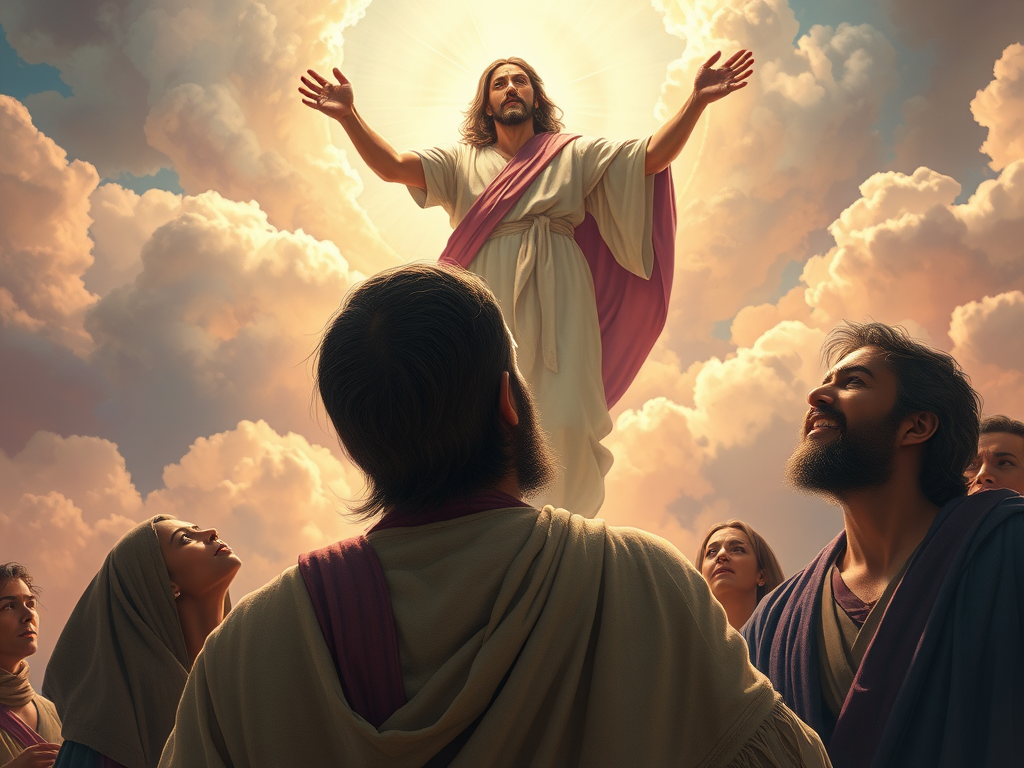
What does ‘This Generation’ mean?

Jesus said: Assuredly I say to you, this generation will not pass away until all these things take place.

Jesus prophesied these unforgettable words to four of his disciples on the Mount of Olives as recorded in Matthew 24:34, Mark 13:30 and Luke 21:30.

It is critical to understand which generation Jesus meant. Taking the plain meaning without any bias, Jesus was referring to his own generation—the generation of his listeners there on the Mount of Olives.

But some scholars say Jesus must have meant a future generation. 

Some others insist that Jesus meant the word “race”,  i.e., the Hebrew race. They reason that because the Hebrew race remains today, the coming of Jesus has not taken place, putting his coming far into the unknown future.

These scholars avoid the obvious meaning in the context of the gospel, dogmatically committed to a future return of Jesus, instead of simply accepting that Jesus spoke of the relative closeness of His coming.

Jesus prophesied to those disciples on the Mount of Olives, that He would return before His hearers’ generation had passed away. Yet many of the same scholars and teachers have no problem in accepting that Jesus spoke literally about the coming fall of the Jerusalem temple.

So then there is no logical reason to exclude the plain fact that Jesus spoke of his soon coming.

Further, there is no doubt the disciples took Jesus’ words “this generation” to mean soon, at the door, at hand. They knew His coming was imminent, perhaps even in their lifetime. We see it in their writings.

Their letters in the N.T. frequently reflect their expectancy of a soon coming, though the hour and day were unknown. We read of their warnings, their urgency to proclaim the gospel of the Kingdom of God and their urgings for their readers to live righteously.


They knew Jesus warned them to get the Kingdom proclaimed in the towns of Judea before His coming (Matthew 10:23).

Check these references out for yourself: Rom 13:11-13, 1 Cor 10:11, Phil 1:6,10, 1 Thes 1:10, 4:17; 2 Thes 1:7; 2 Tim 3:1; Heb 1:2, 9:28, 10:29; Jas 5:3; 1 Pet 1:5, 7-9, 13, 17, 20; 2 Pet 3:3; Jude 19).

Now let’s look at only a few instances of Jesus’ phrase this generation in the gospels, paying close attention to the context of each. You will see they consistently refer to the people alive then as Jesus spoke.

Mat 12:45. . . the last of that man is worse than the first. Even so shall it be also unto this wicked generation.

Mat 12:41-42. The men of Nineveh will stand up with this generation at the judgment, and will condemn it because they repented. . . The Queen of the South will rise up with this generation at the judgment. . .

Mark 8:12. Why does this generation seek . . sign? Truly I say to you, no sign will be given to this generation.

Mark 8:38 : “For whoever is ashamed of Me and My words in this adulterous and sinful generation, the Son of Man will also be ashamed of him when He comes in the glory of His Father with the holy angels”.

Jesus warned people in that crowd that some of them, this generation, will be alive ‘when He comes in glory!  He said this generation not that generation.

Luke 17:25. But first he must suffer many things and be rejected by this generation.

Mat 17:17. O faithless generation, how long shall I bear with you . .  

Here he referred to the crowd who had no faith to heal.

Mat 23:35-36. Assuredly, I say unto you, all these things will come upon this generation.

That phrase is repeated in Mat 24:34, Mark 31:30, and Luke 21:30.

Mat 24:34f, Mk 13:30f, Lu 21:30f. NKJV. Assuredly, I say to you, this generation will by no means pass away till all these things take place. Heaven and earth will pass away, but My words will by no means pass away.

In all three synoptic gospels! And all three carry the word assuredly! (Grk amen) and the affirmation that though heaven and earth could pass away, his words stand forever!

So who would dare to change his plain words?

In Mat 23 we read Jesus’ savage attacks on the Jewish ruling elites of that current generation: Woe to you, scribes and Pharisees, hypocrites!  Then after the 7 woes, we read verses 31-36:

Therefore you are witnesses against yourselves that you are sons of those who murdered the prophets. Fill up, then, the measure of your fathers’ guilt. Serpents, brood of vipers! How can you escape the condemnation of hell? Therefore, indeed, I send you prophets, wise men, and scribes: some of them you will kill and crucify, and some of them you will scourge in your synagogues and persecute from city to city, that on you may come all the righteous blood shed on the earth, from the blood of righteous Abel to the blood of Zechariah, son of Berechiah, whom you murdered between the temple and the altar. Assuredly, I say to you, all these things will come upon this generation.

Further, this particular generation was condemned to such a great extent, that Jesus warned those weeping women as He was led to the cross saying: Weep not for me but for yourselves and your children . . . as he knew what terrible times they would face (Luke 23:28).

Conclusion

In the Olivet discourse of Matthew, Mark and Luke, the generation named by Jesus can only mean the generation of people Jesus was addressing.

We can see that this is consistent with the other numerous references of his using the phrase this generation.

There is no logical or hermeneutical reason why we should not believe and accept that Jesus spoke literally about “all these things will come upon this generation.” (Mat 24:34).

The letters in the New Testament frequently reflect the expectancy of a soon coming, though the hour and day were unknown. We read of their warnings, their urgency to proclaim the gospel of the Kingdom of God and their urgings for their readers to live righteously.

Israel or Christ?

Recently I read an article by Dr Tim Orr who rather than exult the Lord Jesus focuses on a relationship with Israel and the nation, modern Israel. He believes Israel is still God’s chosen people. See his article here: https://dailydeclaration.org.au/2025/11/21/reclaiming-israel/

This author is not true to the New Testament. I sent the following comments to this publication.

God’s promise to Abraham came true for us Christians down to this very day. For we who follow Jesus are the true people of God. We are Abraham’s descendants. Not fleshly Israel. Not earthly Jerusalem.


This author has cherry-picked the scriptures to claim that Israel is the chosen people of God. He has ignored much evidence in the NT for example:


Galatians 6:16. We are the Israel of God. The ὅσοι [‘as many as’] refers to the individual Christians, Jewish and Gentile; and ‘Israel of God’ to the same Christians, seen collectively and forming the true messianic community.” (Word Studies in the New Testament vol. 4, p. 180).

Paul cannot be pronouncing a benediction upon persons who are not included in the phrase “as many as shall walk by this rule” (i.e., the rule of boasting only in the cross). The entire argument of the epistle prevents any idea that here he would give a blessing to those who are not included in this group. And Paul also wrote: “if you are Christ’s, then you are Abraham’s offspring, heirs according to promise”. (Galatians 3:29). See also Galatians 3:6-912.


Galatians 3:26-29: For you are all children of God through faith in Christ Jesus. 27 And all who have been united with Christ in baptism have put on Christ, like putting on new clothes. There is no longer Jew or Gentile, slave or free, male and female. For you are all one in Christ Jesus. And now that you belong to Christ, you are the true children of Abraham. You are his heirs, and God’s promise to Abraham belongs to you (Gentiles).


1 Peter 2:4-10: . . . . . . for you are a chosen people. You are royal priests, a holy nation, God’s very own possession. As a result, you can show others the goodness of God, for he called you out of the darkness into his wonderful light. “Once you had no identity as a people; now you are God’s people. Once you received no mercy; now you have received God’s mercy.”

These terms, chosen people, royal priests, a holy nation, God’s very own possession, reflect Deuteronomy 7:610:1514:2.

Under the New Covenant the same applies to all believers in Christ both Jew and gentile.


Matthew 8:11-12. Jesus said to unbelieving Jews: “I tell you this that many Gentiles will come from all over the world –from east and west–and sit down with Abraham, Isaac and Jacob at the feast in the Kingdom of Heaven. But many Israelites–those for whom the Kingdom was prepared–will be thrown into outer darkness where there will be weeping and gnashing of teeth.”


Replacement theology’?  Nonsense.

Israel has not been replaced. Israel was transformed at Pentecost, with the remnant, Jews from all nations of the Dispersion. From then on these Jewish believers were persecuted by the Jews who rejected their Messiah, as Jesus said would happen in the Olivet Discourse.


And see 1 Thessalonians 2:14-16. And then, dear brothers and sisters, you suffered persecution from your own countrymen. In this way, you imitated the believers in God’s churches in Judea who, because of their belief in Christ Jesus, suffered from their own people, the Jews. For some of the Jews killed the prophets, and some even killed the Lord Jesus. Now they have persecuted us, too. They fail to please God and work against all humanity as they try to keep us from preaching the Good News of salvation to the Gentiles. By doing this, they continue to pile up their sins. But the anger of God has caught up with them at last.


1 Thessalonians 1:3-4. We know, dear brothers and sisters, that God loves you and has chosen you to be his own people.


Romans 11:30–36 does not teach about a kingdom with both Jews and Gentiles as distinct populations within the people of God. That would be a totally abhorrent idea for Paul (Galatians 3-6, Ephesians 2-3).

Many commentators have adopted Israel as their focus. It’s idolatry.

No matter how much New Testament scripture is quoted they don’t want the truth. So brainwashed. 

The Kingdom of Heaven

What is the Kingdom of Heaven?

It is God’s wonderful rule. It is so good that it is called the good news (gospel) of the kingdom–a desirable state.

It is a lifestyle into which Jesus called his disciples to enter and to live under. It is so precious, so important, that people are urged to enter it, no matter what it may cost (Mat 13:44-45).

Jesus said to his disciples:

“Most certainly I tell you, unless you turn, and become as little children, you will in no way enter into the Kingdom of Heaven.  Whoever therefore humbles himself as this little child, the same is the greatest in the Kingdom of Heaven. Matthew 18:3-4

Let’s look closely at this passage:

Context:

This passage is part of a larger discourse in Matthew 18, often called the “Discourse on the Church”.”

The immediate context is that the disciples asked Jesus, “Who, then, is the greatest in the kingdom of heaven?” (Matthew 18:1). Jesus responds by calling a little child to stand among them (Matthew 18:2) and then speaks the words in verses 3-4.

Key Words and Phrases:

“Truly I tell you” (Amen lego humin): This term Jesus often used as for a solemn affirmation that what follows is important and true.

“unless you turn and become like little children”: Turning, the first step, is critical. The Greek word for “change” (strepho) can also mean “turn” or “convert.” It implies a fundamental transformation. The requirement is to become like a child.

“you will never enter the kingdom of heaven”: This is a strong statement about the necessity of this transformation for entering the kingdom of h  eaven and the salvation it brings.

“whoever humbles himself like this little child”: The Greek word for “humbling oneself ” (tapeinose) refers to humility, lowliness, or a state of being humble.

“is the greatest in the kingdom of heaven“: Jesus contrasted the world’s view of greatness (power, status) with the kingdom’s view — humility and childlike dependence.

What is it about a little child that Jesus should ask people to become in order to enter this kingdom?

It is humility. Lack of pride. Absence of self-reliance. Total trust in our heavenly Father.

Trust in the Lord with all your heart; do not depend on your own understanding. Seek his will in all you do and he will show you which path to take.

Interpretation

The child is used as an example of humility, trust, and dependence. In the ancient world, children had low social status; they were dependent and without pretension.

Jesus is not saying that adults should be childish (immature) but childlike in their faith — trusting, humble, and without arrogance.

To “become like little children” means to abandon self-sufficiency and pride and to rely completely on God.

The transformation (“turn”) is a necessary condition for entering the kingdom — it is a call to conversion.

The reversal of values: the greatest in the kingdom is the one who is humble like a child.

Theological Themes:

Humility: Essential for discipleship and kingdom citizenship.

Kingdom access: Entry into the kingdom requires a change of heart and attitude.

Greatness in the kingdom: Defined by service and humility, not by power or status.

Application:

As followers of Jesus we must embrace humility and dependence on God.

Christian communities should value and practice humility, service, and care for and honour the weak.  

In the ancient world, children were considered weak and vulnerable. They are still vulnerable today.

Conclusion


Jesus uses a child as an object lesson to teach that humility and childlike trust are essential for entering and being great in the kingdom of heaven.

Today, this teaching still challenges worldly notions of control, power and status and calls for a transformation of the heart.

The True People of God

Here’s my exegesis of Matthew 21:43, considering its context, language and significance:

“Therefore I tell you, the kingdom of God will be taken away from you and given to a people producing its fruits.”


This verse is the concluding declaration of Jesus’ Parable of the Tenants (vv. 33-41), spoken directly to the chief priests and Pharisees (v. 45).

In the parable, a landowner (God) leases his vineyard (Israel; Isa. 5:1-7) to tenants (religious leaders). They reject/kill the owner’s servants (prophets) and finally his son (Jesus). Judgment falls on the tenants.

The leaders themselves pronounce judgment (v. 41): “He will put those wretches to a miserable death and let out the vineyard to other tenants”.

Jesus confirms their verdict (v. 43) and connects it to Psalm 118:22-23 (vv. 42, 44) about the rejected stone becoming the cornerstone.

Key Terms & Meaning:


“Therefore” (Greek: Dia touto): Links the verse directly to the leaders’ self-condemnation in the parable.

“Kingdom of God”: Refers to God’s reign/authority entrusted to Israel as His covenant people (Ex. 19:5-6; Dan. 2:44).

  • “Taken away from you”: “You” = Israel’s current leadership. They failed as stewards by rejecting God’s messengers and his Son.
  • “Given to a people” (Greek: ethnei): Ethnos typically means “nation” or “people”.
    • This people refers to a new covenant community (Jew + Gentile) under Christ (1 Pet. 2:9-10). This includes faithful Jews who accept Jesus (e.g., apostles) and Gentiles who are ‘grafted in’ to use Paul’s term (Rom. 11:17-24).

“Producing its fruits”: These include obedience, repentance, justice, and faithfulness (Matt. 3:8; 7:16-20). This contrasts with the leaders’ spiritual barrenness (Matt. 23:13-33).

 Theological Significance:

Divine Judgment: God’s kingdom is not irrevocably tied to ethnic Israel or its corrupt leaders. Stewardship requires faithfulness.


Inclusive Redefinition: The kingdom is transferred to a new people of God (the Church) centered on Christ (Eph. 2:11-22). This fulfils Abrahamic promises (Gal. 3:29).

Continuity & Fulfillment: Jesus is the “stone” (vv. 42, 44) establishing God’s kingdom (Dan. 2:44-45). The Church inherits Israel’s spiritual privileges (Rom. 9:6-8; Gal. 6:16).

Warning to All: Leadership in God’s kingdom demands fruitfulness, not just privilege (John 15:1-6).


Application:


To the Original Audience: A direct indictment of Israel’s leaders, warning that rejecting Jesus forfeits their role in God’s plan. Unbelieving Israel forfeits its chosen people status. Plainly, according to Jesus.

To the new People of God: This is a call to faithful stewardship, both Jew and Gentile. Privilege implies responsibility.

To Individuals: Entrance into God’s kingdom requires receiving Christ (John 1:12) and bearing spiritual fruit.

Connection to Jesus:

This verse underscores Jesus’ authority to redefine the people of God around Himself. His impending death/resurrection (which is implied in the parable) will inaugurate the new covenant community which replaces or replenishes Israel.

In Summary

Matthew 21:43 declares a monumental shift—the kingdom stewardship passes from unfaithful leaders to a new, multi-ethnic people under Christ, marked by responsive faith and spiritual fruitfulness. This is both a warning and a promise of God’s unfolding redemptive plan.

Jesus’ authority to redefine the true people of God around Himself is emphatically expressed and cannot be denied.

This redemptive plan falsifies the teaching of Dispensationalism. The nation state of Israel is not Paul’s “Israel of God.” (Gal 6:16)

Prove me wrong!

The Apostles See Jesus No More

In the opening verses of the NT Book of Acts, Luke gives us the account of Jesus’ ascension. This is not the only account we have of the ascension in the Bible. In Luke 24:50-52 there is a brief account.

But this passage contains some valuable information which the casual reader may easily miss.

Let’s look at the passage.

6.  So when the apostles were with Jesus, they kept asking him, “Lord, has the time come for you to free Israel and restore our kingdom?”  

6. they kept asking him. Their question shows they thought just as the Jews thought –in terms of a Davidic messiah and an earthly kingdom of Israel free of Roman rule. They were still focused on Israel and its future. It was not about the kingdom of Israel. It was about the Kingdom of Heaven. This would all soon change with the inauguration of the new covenant in Jesus’ blood.

7. He replied, “The Father alone has the authority to set those dates and times, and they are not for you to know.

 The Father alone sets dates, times. Jesus had already told the disciples that the timing of His coming was unknown (Mat 24:36). Only the Father determines the times and seasons.

8. But you will receive power when the Holy Spirit comes upon you. And you will be my witnesses, telling people about me everywhere—in Jerusalem, throughout Judea, in Samaria, and to the ends of the earth.”

But: Grk, G235 alla, contrariwise, emphatic—the disciples will have to think differently—to radically change their mind.

My witnesses: Very soon they will see him no longer because he is going to the Father, where they cannot come (see John 14:28-29). Instead, they are to receive power with the coming of the Holy Spirit and be his witnesses everywhere.  This would be a huge refocus. 

9. After saying this, he was taken up into a cloud while they were watching, and they could no longer see him. 

  • taken up into a cloud. Jesus was hidden from their eyes by a cloud as he went into Heaven. Clouds denote God’s glory. These ‘clouds’ appear to shut heaven, or the sky, from human view. He was hidden from their eyes by cloud. Just as He was hidden from their eyes as He went into Heaven, so when he comes He will be hidden to human eyes by the clouds of glory (Mat 24:30).

10. As they strained to see him rising into heaven, two white-robed men suddenly stood among them. 

they strained to see him. The cloud made it very difficult to see him, then impossible to see him.

two white-robed men. One of the many references to angels in the NT suddenly appearing (cf Luke 24:4 at the empty tomb). 

11. “Men of Galilee,” they said, “why are you standing here staring into heaven? Jesus has been taken from you into heaven, but someday he will return from heaven in the same way you saw him go!”

Jesus has been taken. Note the past tense ‘has been taken’

taken from you. They will see him no longer.

Men of Galilee. Here is aninteresting detail: they were addressed as ‘men of Galilee’. It is they who were addressed and not us today. Context is critically important for correct interpretation.

Jesus will someday return. The two ‘men’ declared Jesus will ‘someday’ return from heaven. The disciples already knew he would soon return (Matthew 10:23, 16:27-28, 24:30), but the hour or the day was unknown (Mat 24:36). This was a confirmation for them.

In the same way. The disciples could not see him because he was hidden by the cloud of glory. In the same way when he returns he will come in clouds of glory again hidden from human eyes in his then ascended form.  

This story shows us today that the coming return of Jesus was to occur within the lifespan of those present, these “men of Galilee”. So it rationally follows that return has already occurred!

This passage and the Matthew 24:30-34 passage, teach us the same thing: Jesus returned within the lifespan of the disciples!  

The coming of Jesus that we read in both Acts 1:6-11 and in the gospels (Matthew 10:23, 16:27-28, 24:30-34) cannot possibly be a “coming” that will occur in our future, for indeed, it has already occurred in the generation of the disciples.

Go figure!

Please prove me wrong.

Rapture? Three Greek Words

Subscribe to continue reading

Subscribe to get access to the rest of this post and other subscriber-only content.

Jesus Is Already Here

Countless Christians have been falsely taught to believe that one day Christ will suddenly appear on the clouds to fix everything. They have been so brainwashed about it is very difficult for them to face the truth in the scriptures. The rapture doctrine is grossly false as I explain elsewhere–https://ianthomsonian.org/?s=rapture.

This is a massive, worldwide psyopt (psychological operation). Brainwashing. Cognitive dissonance.  

Jesus plainly taught his disciples that he would return within a generation. (Mat 10:23, 16:27-28, 24:30-34). Millions have ignored Jesus’ plain promise. He came invisible to human eyes, hidden in clouds of glory.

No one has ever seen him since he ascended on high and dwells in unapproachable light and glory.

He said this surprising thing to his disciples about the coming of the Holy Spirit “where you can see me no longer”. (John 16:7-10).

The New Testament teaches us that we are meant to be in the world but not of the world! We are to be in the world, to make disciples everywhere, to be salt and light! “You are the light of the world– A city on a hill cannot be hidden”. (Mat 5:14)

Jesus’ disciples heard him praying this to the Father . . . .

I’m not asking you to take them out of the world, but to keep them safe from the evil one. . . . . . Just as you sent me into the world, I am sending them into the world.  . . . . . . . “I am praying not only for these disciples but also for all who will ever believe in me through their message.   I pray that they will all be one, just as you and I are one—as you are in me, Father, and I am in you. And may they be in us so that the world will believe you sent me.”

He also said very clearly that his words remain in us!

. . . if you remain in me and my words remain in you, you may ask for anything you want, and it will be granted!  When you produce much fruit, you are my true disciples. This brings great glory to my Father. .” John 15:7-8.

He told them (and as a result us) that he has made his home with them (and us)

“All who love me will do what I say. My Father will love them, and we will come and make our home with each of them.” (John 14:23)

Here on earth we are meant to bear much fruit . . . .

 “Those who remain in me, and I in them, will produce much fruit. (John 15.5)

Paul wrote about believers being active here on planet Earth and not longing to escape  . . . .

I thank my God through Jesus Christ because your faith is being proclaimed throughout the whole world (Rom 1:8)

You are a temple of God and the Spirit of God dwells in you (1 Cor 3:16)

. . . .  So, my dear brothers and sisters, be strong and immovable. Always work enthusiastically for the Lord, for you know that nothing you do for the Lord is ever useless. (1 Cor 15:58)

. . .   for you have been my partners in spreading the Good News about Christ from the time you first heard it until now. And I am certain that God, who began the good work within you, will continue his work until it is finally finished on the day when Christ Jesus returns. (Phil 1:5-6) 

For to me, living means living for Christ, and dying is even better. But if I live, I can do more fruitful work for Christ. So I really don’t know which is better.  I’m torn between two desires: I long to go and be with Christ, which would be far better for me.  But for your sakes, it is better that I continue to live. (Phil 1:21-24)

As a result, you have become an example to all the believers in Greece—throughout both Macedonia and Achaia. And now the word of the Lord is ringing out from you to people everywhere, even beyond Macedonia and Achaia, for wherever we go we find people telling us about your faith in God. We don’t need to tell them about it,  for they keep talking about the wonderful welcome you gave us and how you turned away from idols to serve the living and true God.  And they speak of how you are looking forward to the coming of God’s Son from heaven—Jesus, whom God raised from the dead. (1 Thes 1:8-10)

As David Sorensen puts it so well . . . . 

“Christ is not there, somewhere, far, far away. He is here, as close as can be—in the hearts and lives of all who welcome Him, who see Him, who accept His love for humanity. He has made His dwelling with all those who love Him. We are not waiting for Christ to “return. . . . . 

How can you be waiting for Him who is inside of you, who never leaves you, who walks where you walk, who speaks when you speak, who touches when you reach out, who is your all in all? . . . .   

Christ is our strongest Ally, our powerful Guide, our heroic Deliverer. He is always here with us, inside of us, and He wants to work through us—shine His light, bring His deliverance, release His voice, establish His reign of restoration.

So let’s cease waiting for Christ to “return,” but learn how Jesus is here with us—Emmanuel. Get busy in the work of the Good News! He is always with us, everywhere, all the time. 

We are Christ containers!

ATHEISM: TRUTH SUPRESSED   

   When the famous atheist astronomer Fred Hoyle first examined the evidence of how the universe is so finely tuned, he had to admit there had to be a super intelligence to make this happen. He said:

“A common sense interpretation of the facts suggests that a super intellect has monkeyed with physics, as well as with chemistry and biology, and that there are no blind forces worth speaking about in nature.”

“The likelihood of the formation of life from inanimate matter is 1 to a number with 40,000 noughts after it (1040,000)…. It is big enough to bury Darwin and the whole theory of evolution. There was no primeval soup, neither on this planet nor any other, and if the beginnings of life were not random, they must therefore have been the product of purposeful intelligence.” ~ Fred Hoyle

“The chance that higher life forms might have emerged through evolutionary processes is comparable with the chance that a tornado sweeping through a junk yard might assemble a Boeing 747 from the material therein.” ~ Fred Hoyle

Many people do not want to consider such a super-intellect being. Actually many modern sceptics in their hearts do not want there to be a God. For example, see what Professor Thomas Nagel of New York University said:

“I want atheism to be true and am made uneasy by the fact that some of the most intelligent and well-informed people I know are religious believers. It isn’t just that I don’t believe in God and naturally hope there is no God! I don’t want there to be a God; I don’t want the universe to be like that.”

That’s worth repeating and reflecting deeply the professor’s words:

I want atheism to be true.

I don’t want there to be a God.

I don’t want the universe to be like that.

This is a profound example of someone who will not believe, despite the abundant evidence available. This is plain unbelief and exposes how people hold the truth in their unrighteousness. They suppress the truth as Paul wrote in his letter to the Romans (chapter 1):

So God abandoned them to do whatever shameful things their hearts desired. As a result, they did vile and degrading things with each other’s bodies. 25 They traded the truth about God for a lie. So they worshiped and served the things God created instead of the Creator himself, who is worthy of eternal praise! Amen.  That is why God abandoned them to their shameful desires. Even the women turned against the natural way to have sex and instead indulged in sex with each other. And the men, instead of having normal sexual relations with women, burned with lust for each other. Men did shameful things with other men, and as a result of this sin, they suffered within themselves the penalty they deserved. (Rom 1:24-27)

What are the results of such foolishness? They are awful. The apostle continues:

Since they thought it foolish to acknowledge God, he abandoned them to their foolish thinking and let them do things that should never be done. Their lives became full of every kind of wickedness, sin, greed, hate, envy, murder, quarrelling, deception, malicious behaviour, and gossip. They are backstabbers, haters of God, insolent, proud, and boastful. They invent new ways of sinning, and they disobey their parents.  They refuse to understand, break their promises, are heartless, and have no mercy. They know God’s justice requires that those who do these things deserve to die, yet they do them anyway. Worse yet, they encourage others to do them, too. (Rom 1:28-32)

There are probably many reasons why people don’t want this God to be true.

It is plain that unbelief in God is a matter of the heart. “The heart of man is desperately wicked.” (Jeremiah 17:9). Only God can truly search and test the heart, as he alone knows the true motives and character of individuals. This profound self-deception underscores the need for divine intervention. Human effort alone cannot reform the heart. The Hebrew word translated “desperately wicked” has the idea of a terminal, incurable illness.

Thus it has nothing to do with the intellect. Only the heart.

Jeffrey Tucker writes:

This is why atheism has always struck me as little more than an intellectual pretension. It’s actually the height of arrogance: “I have considered this very carefully and concluded using my own incredibly powerful brain, packed with infinite knowledge of all things, that there is no higher power.”

A person’s private belief aside, religious tradition massively shapes society in every conceivable way. Always has and always will. Even if you don’t believe, even if this upsets you, it still bears respect and understanding.   Epoch Times, October 2025


No One Can See God

Jesus said: “But very truly I tell you, it is for your good that I am going away. Unless I go away, the Advocate will not come to you; but if I go, I will send him to you. . . . . .  because I am going to the Father, where you can see me no longer . . . “. (John 16:7-10).  

He said this surprising thing “where you can see me no longer”. He said that he would send the Holy Spirit. The Holy Spirit was better for them than his physical presence!

Can you grasp how incredible that is?

The truth that many people miss is that no one can see Christ in bodily form and live.

But instead, Jesus told them he would send what could not be seen: the Holy Spirit. That gift enables the multiplication of the works of Christ by his followers in the world. Those works will be seen.

Many people are obsessed with the idea that Jesus will come and they will physically see Jesus. They will be disappointed. We already have what is for our good that he went away!

He will not come back to rule physically from an earthly Jerusalem. If you believe that you have believed a lie.

The New Testament tells us that when the Son of Man comes he comes hidden in the clouds of God’s splendour and glory! (e.g., Mat 24:30, 26:64) 

His coming is often called a ‘Parousia’ (1 Thes 2:19,3:13, 4:15). In Jesus’ day parousia meant ‘visit’, typically of the visit of a king who leaves his palace and visits a city but then returns to his home.

His coming will not be physically ‘seen’ but understood. He could never be seen by human, physical eyes in His exalted, glorious, state, “whom no one has seen or can see” (1 Tim 6:16).

The NT says when he comes it will be in judgment and the fulfilment of all that is written (Luke 21:22), not to be gazed at. See also judgment passages in 1 Thes 1:10, 2:15-16.

The Holy Spirit is with them from the Day of Pentecost until He comes again and beyond to this our day—the experience we have now!

See Acts 1:9. “And after He had said these things, he was lifted up while they were looking on, and a cloud received him out of their sight.” He was hidden from their eyes by a cloud (Grk. nephelē). Just as he was hidden from their eyes as he went into heaven, so when he comes He will be hidden to human eyes by the clouds of glory (Mat 24:30).

Since then, Jesus has never been physically seen by human eyes. nor will he ever.

Do you see? Do you understand? Many stumble over this, thinking that because he would not be seen by human eyes, then he has not yet come.

Paul wrote: we wait for the blessed hope—the appearing of the glory of our great God and Saviour. (Titus 2:11f.) The blessed hope of Paul was the appearing of his glory, not his physical presence.

That appearance of his glory has already come and been seen by the first generation of believers according to Mathew 10:23, 16:27-28, 24:30-34, as I have written in my many posts on my blog.

Let’s rejoice that he has come to dwell by his Spirit among his people, His ekklesia, and to empower us to be his witnesses as he did with the first apostles!

Please explain to me

Please explain to me why Jesus several times promised his disciples that he would return within the lifetime of some of them.

First. Please explain to me why Jesus said this to his disciples before sending them on their mission to Israel:  “When you are persecuted in one town, flee to the next. I tell you the truth, the Son of Man will return before you have reached all the towns of Israel.” (Mat 10:23)

My comments:  There was an urgency for them to complete their task! Time was limited so they were to go only to the lost sheep of the house of Israel; not to carry money or extra clothing or waste time in places where their message was not received. URGENT! Jesus will return before they have reached all the towns of Israel.” Not centuries in the future!

Second. Please explain to me why Jesus told his disciples: “For the Son of Man will come with his angels in the glory of his Father and will judge all people according to their deeds.  And I tell you the truth, some standing here right now will not die before they see the Son of Man coming in his Kingdom.” (Mat 16:27-28)

My comments:  In this context, Jesus challenged these disciples to follow him. He warned them to be committed to the Kingdom of God and to be ready for his return before some of them had died.

His coming and the Kingdom of God was not centuries in the future, but a mere generation!

Third. Please explain to me why Jesus told his disciples: “And the Good News about the Kingdom will be preached throughout the whole world (Greek oikoumenē) so that all nations will hear it; and then the end will come. (Mat 24:14) 

My comments: In the Olivet Discourse, Jesus once again emphasied the shortness of time to the listening disciples. The Greek oikoumenē (Strongs G3625) translates the phrase ‘the whole world’. This word, oikoumenē  meant the civilised world, the Roman empire which Paul tells us happened– see Rom 10:1816:26Col 1:623.   The End, his coming, he promised during the time of the apostles, in the Roman Empire. Not centuries in the future!

Fourth. Please explain to me why Jesus told his disciples to learn the lesson of fig tree. “When its branches bud and its leaves begin to sprout, you know that summer is near.  In the same way, when you see all these things, you can know his return is very near, right at the door” (Mat 24:32-33)

My comments: Jesus knew their question about when The End comes. He responded by comparing the seasonal changes in the fig tree to the time of his return. They can see when summer is near,–only a short time away. Similarly, when they see things like the Abomination of Desolation and the great tribulation they can see how close is his return. It is very near. In fact it was right at the door!

Fifthly. Please explain to me why Jesus told his disciples I tell you the truth, this generation will not pass from the scene until all these things take place. (Mat 24:34)

My comments: Remarkably, once more in that discourse, Jesus emphasied the shortness of time to the listening disciples. The current generation of those disciples and others in Israel would not have vanished until events including the great tribulation and his coming have taken place. Within about 40 years. Not centuries in the future!

How to Conquer a Death Cult

by Andrew Torba

There are moments in history when the veil is lifted, and the true nature of an ideology is laid bare for all to see. The aftermath of the cowardly assassination of Charlie Kirk was one of those moments. While patriots across America mourned the loss of a bold voice for freedom, truth, and the future of our nation, the Left erupted in celebration.

They laughed. They cheered. They shared memes. They hailed the murderer as a hero. They desecrated the memory of a man gunned down for the simple act of speaking truth.

This is not an anomaly. This is not the work of a few bad apples. This is the logical endpoint of liberalism: a death cult that worships at the altar of destruction.

At its core, this ideology venerates death. It champions the right to end innocent life in the womb, rebranding the slaughter of the unborn as “healthcare” and a sacred right. It encourages the chemical and surgical mutilation of healthy young bodies, a grotesque parody of medicine that severs the individual from their own biological reality. It pushes policies that dissolve the fundamental bonds of family and community, leaving isolated, atomized individuals adrift in a meaningless sea of consumer choices and state dependency.

Now, they celebrate political assassinations.

This is who they are. This is what they believe in. There is no life in their ideology only decay, degradation, and death. They cannot create, so they destroy. They cannot build, so they tear down. They cannot defend truth, so they silence those who speak it.

Charlie Kirk was a threat to them not because he was violent, not because he preached hatred, but because he represented something they despise: life, vitality, courage, and a future for our people. He stood for the America they are trying to erase. In their twisted world, the murder of a young man with a family, friends, and a mission is cause for joy. In their moral vacuum, the blood of the innocent is just another tool in their war against God, nature, and order.

We see you. We see your hatred. We see your emptiness. We see the hollow, lifeless eyes of a movement that has nothing left to offer but destruction, and we will not be silenced. We will mourn Charlie. We will honor his legacy. We will continue his work. And we will remember this moment, the moment the death cult showed its true face to the world.

They think this will frighten us into submission. They are wrong. It only strengthens our resolve.

For we are the builders. We are the defenders. We are the bearers of life, faith, and hope. We will never stop fighting for the future they are so desperate to destroy.

The modern liberal worldview is a hollowed-out edifice built upon a foundation of nihilism and resentment. It is not merely misguided; it is, in its essence, a metaphysical rebellion against creation itself. Its pillars are not principles of life, order, or continuity, but glorifications of decay, fragmentation, and ultimate negation.

This is not an accident. A culture that severs itself from its spiritual and biological roots—from faith, from heritage, from the natural order of the family—has nothing left to affirm. Having rejected the sacred, it can only profane. Having rejected creation, it can only dismantle.

This is the death cult. It masks its emptiness with the language of “compassion” and “progress,” but its fruits are everywhere: fatherless homes, soul-crushing addiction, mental illness on an epidemic scale, and a culture that produces young people so deracinated and hopeless that they cheer for murder.

They offer no future, only an endless, sterile present of managed decline. They cannot create beauty, so they deface monuments. They cannot produce harmony, so they amplify chaos. They cannot foster life, so they defend every manifestation of death.

Our response cannot be mere political opposition. It must be a total and profound rejection of their entire worldview. We must be the unequivocal champions of life. We must build large, faithful families. We must create beautiful and lasting things. We must reaffirm our connection to God, to our people, and to the land. We must be so generative, so life-affirming, and so filled with purpose that their culture of death simply withers in the shadow of our vitality.

They celebrate the darkness because they have forgotten what the light looks like. It is our duty to shine it so brightly that they are forced to remember, or to look away.

The spirit of the age does not knock politely at the Church’s door; it slithers in directly from the pulpit. The same death cult that celebrates murder in the streets and glorifies mutilation in the classroom has found a comfortable home within the compromised walls of modern Christianity. It has exchanged the robust, world-conquering faith of our fathers for a weak, effeminate, and apologetic social club, a chaplaincy to the very regime that seeks our destruction.

This infiltration is a betrayal of our entire history. Look to the men who built Christendom. They were not managers of decline. They were not anxious pleasers of the world. They were conquerors. They were kings, knights, saints, and martyrs who carved civilization out of wilderness and darkness with the sword of truth and the shield of faith. They understood that the Gospel was not a suggestion; it was a mandate to reclaim every inch of creation for Christ the King.

This was a masculine Christianity. It spoke of order, justice, duty, and victory. It built cathedrals that scraped the heavens, universities that pursued divine wisdom, and legal systems based on eternal law. It tamed empires and baptized cultures. It did not ask for permission from the world; it commanded the world to bend the knee.

Now, look at what we have been given. A Church that has traded its crown for a begging bowl. A faith that preaches “tolerance” instead of truth, “dialogue” instead of discipleship, and “inclusion” instead of repentance. It busies itself with ESG scores, climate change rituals, and draping rainbow flags over the cross in a pathetic attempt to gain the approval of a world that will always despise it.

This weakness is a theological and spiritual sickness. It is a failure of nerve and a failure of faith. It is the direct result of a Church that has abandoned its masculine, commanding nature and instead embraced the world’s feminine, receptive values of passivity, feel-good therapy, and endless compromise.

We see it in the pulpit, where the fire of prophecy has been replaced by the damp squib of motivational speaking. We see it in the seminary, where future shepherds are taught to be bureaucrats rather than warriors. We see it in the pews, where men are given no mission, no challenge, and no standard to strive for and so they leave.

This must end. The roots of this parasitic ideology must be ripped out, burned, and salt poured into the earth where they grew.

We must return, with unapologetic fervor, to the Christianity that built the West.

We must preach a God who is a Father, a King, and a Judge not a vague, affirming force. We must call men to be saints, not therapists; to be leaders of households and nations, not passive observers. We must reclaim the arts, the laws, the sciences, and the governance of our people as our rightful domain, given to us by God to steward for His glory.

This means cleansing our institutions. It means defunding and disempowering every committee, diocese, and seminary that trades in this death-cult poison. It means supporting only those bishops and pastors who act like fathers and generals, not like corporate spokesmen. It means building parallel networks of education, media, and community that operate wholly outside the corrupt systems of the world.

We are not called to be a quaint subculture. We are called to be a conquering army, baptizing the nations for the glory of God. The same faith that once turned the Roman world upside down is still there, waiting beneath the layers of weakness and compromise. The remnant remains intact. It is time to rediscover it. It is time to stop managing our retreat and start planning our advance.

The world offers death. We must offer life, fierce, abundant, and eternal. We must be so strong in faith, so clear in truth, and so bold in action that the world has no choice but to once again reckon with the power of the God we serve.

Do not let the fire in your belly die. The righteous anger, the profound grief, the clarity of purpose that Charlie Kirk’s martyrdom ignited within you. This is not a fleeting emotion to be forgotten with the next news cycle. This is a sacred fuel. Guard it. Nurture it. Feed it with prayer, with action, and with an unbreakable resolve to ensure his death was not in vain.

Let this flame forge you into a sharper tool for this battle, a more formidable wall against the advancing darkness. The world wants you to get tired, to get comfortable, to forget. Do not give them that satisfaction. Honor Charlie’s memory by making this fire the eternal pilot light of your spirit, guiding your every thought, word, and deed until the work is done and our people are once again free, sovereign, and thriving under God.

Andrew Torba
CEO, Gab AI Inc
Christ is King

Published in Bold Christian Writing