Monthly Archives: February 2025

How Jesus’ first disciples learned about ‘the End’

Jesus took the disciples up on Jerusalem’s Mt Olivet (Matthew 24) go discuss the destruction of the Jerusalem temple. What eschatological understanding would the disciples already have understood?

Jesus would have expounded many OT scriptures that pointed to end times. Also He would have given them His own direct teachings. Matthew recorded many of these He gave them before the Olivet discourse. I was surprised how many there were. This article shows what I discovered.

The disciples would know about John the baptiser warning the Jewish leaders of the wrath to come.  Mat 3:1-2, 7-10: . . .  John the Baptist came, preaching in the wilderness of Judea, saying, “Repent, for the kingdom of heaven has come near.” . . . . . But when he saw many of the Pharisees and Sadducees coming for baptism, he said to them, “You offspring of vipers, who warned you to flee from the wrath to come? . . . .   And the axe is already laid at the root of the trees; therefore, every tree that does not bear good fruit is being cut down and thrown into the fire.

The disciples would also have heard Jesus announcing the nearness of the kingdom–Mat 4:17. From that time Jesus began to preach and say, “Repent, for the kingdom of heaven has come near.”

They heard Him declare “Do not presume that I came to abolish the Law or the Prophets; I did not come to abolish, but to fulfil. Mat 5:17. 

They heard this:  I say to you that many will come from east and west, and recline at the table with Abraham, Isaac, and Jacob in the kingdom of heaven; but the sons of the kingdom will be thrown out into the outer darkness; in that place there will be weeping and gnashing of teeth.” Mat 8:10-12. 

They witnessed Isaiah 53:5 fulfilled: He cast out the spirits with a word, and healed all who were ill. This happened so that what was spoken through Isaiah the prophet would be fulfilled: “He Himself took our illnesses and carried away our diseases.”  Mat 8:16.

He warned them what to expect as he sent them out on their mission to the Jews.

“When you are persecuted in one town, flee to the next. I tell you the truth, the Son of Man will return before you have reached all the towns of Israel”. Mat 10:23.

Clearly, here He gave them then a time frame when He would return. This would hasten them to finish the preaching of the coming Kingdom of God to the Jews while there was still time for them to repent. This was a very urgent mission—a race against time. There was no time to waste in towns especially where they would be persecuted. We can read in the Acts account and in the letters of Paul how they quickly went from town to town and brought results e.g., Rom 1:8, Col 1:6.

Jesus told them His coming would be “soon”, in their generation. “For the Son of Man will come with his angels in the glory of his Father and will judge all people according to their deeds. And I tell you the truth, some standing here right now will not die before they see the Son of Man coming in his Kingdom.”  Mat 16:27-28.

The disciples asked Him to explain the parable of the weeds. He answered, “The one who sowed the good seed is the Son of Man. The field is the world, and the good seed stands for the people of the kingdom. The weeds are the people of the evil one, and the enemy who sows them is the devil. The harvest is the end of the age, and the harvesters are angels. “As the weeds are pulled up and burned in the fire, so it will be at the end of the age. The Son of Man will send out his angels, and they will weed out of his kingdom everything that causes sin and all who do evil. They will throw them into the blazing furnace, where there will be weeping and gnashing of teeth.  Mat 9:36-43.

And to explain the Parable of the Net: . . .   the kingdom of heaven is like a net that was let down into the lake and caught all kinds of fish. When it was full, the fishermen pulled it up on the shore. Then they sat down and collected the good fish in baskets, but threw the bad away. This is how it will be at the end of the age. The angels will come and separate the wicked from the righteous and throw them into the blazing furnace, where there will be weeping and gnashing of teeth. Mat 13:47-50. 

He promised them: Truly I tell you, at the renewal of all things, when the Son of Man sits on his glorious throne, you who have followed me will also sit on twelve thrones, judging the twelve tribes of Israel. He referred to the future time when God will restore creation to its original perfection. His “glorious throne” symbolizes His authority and rule over the restored creation. Mat 19:28. 

They will have positions of authority and leadership in Jesus’ kingdom. This is not a literal judgement, but rather a way of expressing their role in governing and guiding God’s people.

They heard Him declare to Jewish leaders:  . .  Therefore I tell you that the kingdom of God will be taken away from you and given to a people who will produce its fruit.  . . . . .   When the chief priests and the Pharisees heard Jesus’ parables, they knew he was talking about them. Mat 21:33-45.

In the Parable of the Wedding Banquet, Jesus gave more information to the disciples :

 “The kingdom of heaven is like a king who prepared a wedding banquet for his son. He sent his servants to those who had been invited to the banquet to tell them to come, but they refused to come. “Then he sent some more servants and said, ‘Tell those who have been invited that I have prepared my dinner: My oxen and fattened cattle have been butchered, and everything is ready. Come to the wedding banquet.’ “But they paid no attention and went off—one to his field, another to his business. The rest seized his servants, mistreated them and killed them. The king was enraged. He sent his army and destroyed those murderers and burned their city. “Then he said to his servants, ‘The wedding banquet is ready, but those I invited did not deserve to come. So go to the street corners and invite to the banquet anyone you find.’ So the servants went out into the streets and gathered all the people they could find, the bad as well as the good, and the wedding hall was filled with guests.  “But when the king came in to see the guests, he noticed a man there who was not wearing wedding clothes. He asked, ‘How did you get in here without wedding clothes, friend?’ The man was speechless. “Then the king told the attendants, ‘Tie him hand and foot, and throw him outside, into the darkness, where there will be weeping and gnashing of teeth.’ Mat 22:2-14.

Here they learnt about Jesus’ eschatological marriage to His assembly (Greek ekklesia – church) of believers who follow Him. The guests at the feast that are clothed in the proper wedding garments are clothed in Christ’s righteousness provided by God through faith in Jesus. The man without the proper wedding garments is about the unbelieving Jews. It symbolizes a lack of proper preparation or acceptance of the invitation on God’s terms—that is, to believe on the Lord Jesus Christ.

Finally in the week of Jesus’ passion, they heard Jesus’ final words of declaration of judgment on the whole house of Judaism: “Jerusalem, Jerusalem . . . .   Look, your house is left to you desolate. For I tell you, you will not see me again until you say, ‘Blessed is he who comes in the name of the Lord.”  Mat 23:37-39.

Their house is left to them ‘desolate’—solitary, lonely, uninhabited unfit for anyone especially by the Lord; replaced by the Household of faith in the Blessed One who comes in the name of the Lord.  
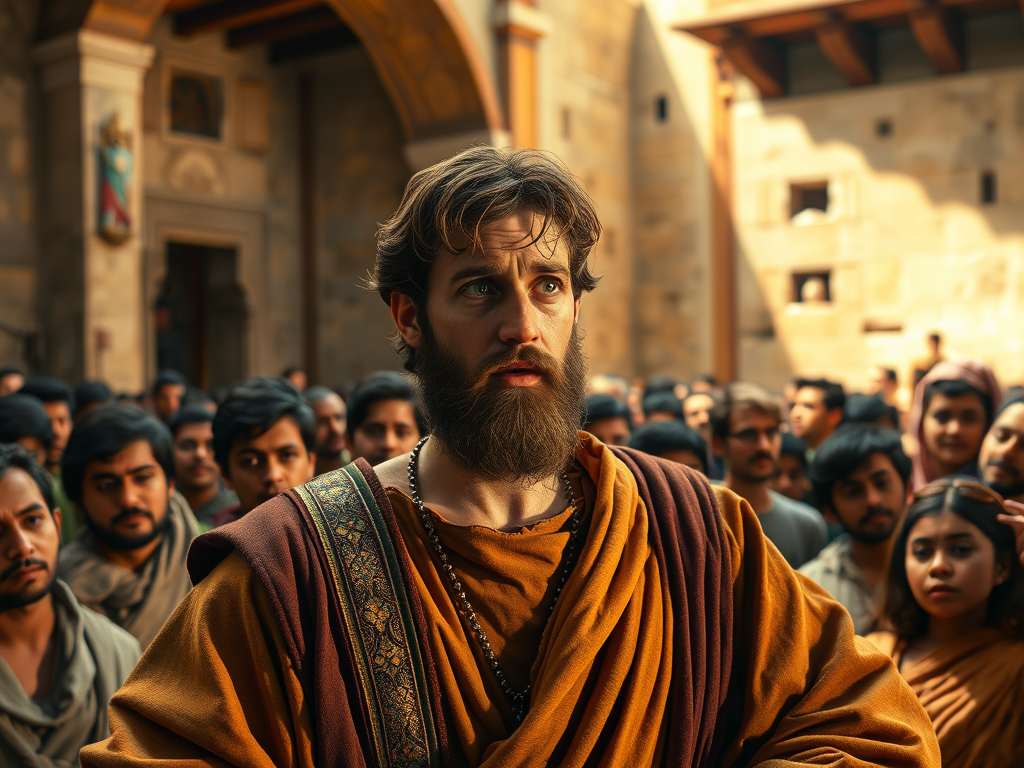
Peter’s Jerusalem Temple Speeches

In this article we look at part of Peter’s great speech recorded by Luke in Acts 2:14-21. This event was the inauguration of the New Covenant which took place in Jerusalem during the Jewish feast of Pentecost when thousands of Jews from many countries joined the locals. The New Covenant means the END of the Old Covenant! Forget Israel. Forget Jerusalem!  Luke 2:14-21:

Then Peter stepped forward with the eleven other apostles and shouted to the crowd, “Listen carefully, all of you, fellow Jews and residents of Jerusalem! Make no mistake about this.  These people are not drunk, as some of you are assuming. Nine o’clock in the morning is much too early for that. No, what you see was predicted long ago by the prophet Joel: “And it shall come to pass in the last days, said God, I will pour out of My Spirit on all flesh: and your sons and your daughters shall prophesy, and your young men shall see visions, and your old men shall dream dreams: And on My servants and on My handmaidens I will pour out in those days of My Spirit; and they shall prophesy: And I will show wonders in heaven above, and signs in the earth beneath; blood, and fire, and vapour of smoke:  The sun shall be turned into darkness, and the moon into blood, before the great and notable day of the Lord come: And it shall come to pass, that whoever shall call on the name of the Lord shall be saved”.

V 16. Joel’s prediction

Peter was referring to the phenomena of supposedly drunken people which was the evidence of the pouring out of the Holy Spirit on the 120 disciples gathered in Jerusalem on the Day of Pentecost. He affirmed that “this” supernatural phenomena was the fulfilment of Joel’s prophecy (Joel 2:28) in the Old Testament. Fulfilment means fulfilment. Done.

The Book of Acts goes on to this describe how was fulfilled: God certainly poured out his Spirit on all sorts of people–sons and daughters prophesied, young men saw visions and old men had dreams: Even on servants and handmaidens, God poured out His Spirit in those days. Luke describes many stories of miraculous healings and many other astounding gifts of the Holy Spirit.

This was the inauguration of the New Covenant which we enjoy to this day with the continued pouring out of the Holy Spirit. It was the birth of the movement we call Christianity. It marks the change from the Old Testament to the New Testament. And from a focus on the Jews and Israel as a piece of land to the true focus of the Israel of God—the ekklesia, spiritual Israel. This is exactly what Jesus spoke about to the Samaritan woman in John 4:

“. . .  it will no longer matter whether you worship the Father on this mountain or in Jerusalem.  . . . .   But the time is coming—indeed it’s here now—when true worshipers will worship the Father in spirit and in truth. The Father is looking for those who will worship him that way. For God is Spirit, so those who worship him must worship in spirit and in truth.

V 17. the last days. The biblical writers used these expressions “the last days” or “the end” to mean the last days of the Jewish economy and the end of the Mosaic religious era and the time of the second coming of the Son of Man and the day of God’s wrath.  They did not mean the end of the world. Not the end of history.

Vs 19-20. Some think that verses 19 and 20 are describing the results of global nuclear war as they believe they are living in the last days. They are sorely mistaken because the New Testament records that Jesus promised his disciples that he would come again before his generation has passed away as recorded in Matthew 16:27-28 and 24:34).

These verses 19-20 describe the signs of the coming of the Son of Man in the familiar terms of judgment using non-literal expressions.  This was a common motif we find in the Old Testament prophets —the collapsing of cosmic entities in their judgment prophecies, e.g. Isa 13:10, 19:1,24:18-20, 34;8-15, Ezek 32:7–8; Joel 2:28).

These cosmic signs are not descriptions of the results of global nuclear war or the end of the world. These would take place ‘before the great and notable day of the Lord comes.’ So what great and notable day is this? The answer is found in the next chapter of Acts (3:18-21).

We find Peter addressing another crowd curiously attentive after the healing of the crippled man and the ensuing sensation:

But God was fulfilling what all the prophets had foretold about the Messiah—that he must suffer these things. Now repent of your sins and turn to God, so that your sins may be wiped away.  Then times of refreshment will come from the presence of the Lord, and he will again send you Jesus, your appointed Messiah. For he must remain in heaven until the time for the final restoration of all things, as God promised long ago through his holy prophets.

Fulfilling the prophecies. Because God now at last was fulfilling the prophecies told about Jesus, this was the most significant time in Jewish history and for the whole world as well. All was fulfilled! (also see Luke 21:20-22).

Repent. Their repentance would guarantee the presence of the Lord in their lives. No more squeezing stale refreshment from the Law or the sacrificial system. Now they would experience wonderful refreshment from the presence of the Lord in their lives. Relationship not religion.

God will again send you Jesus. God will again send Jesus to redeem them. Peter addresses them, ‘you’ (not us today). He wil gather his people back to himself and that will be the completion of His atoning sacrifice. See Hebrews 9:11-15 and 27-28: He will appear a second time, not to deal with sin, but to bring salvation to all who are eagerly waiting for him. His re-appearance means completed salvation—just as the appearance of the Jewish high priest on the Day of Atonement meant the sacrifice was successful.

He must remain in heaven until. So there was still more to come for those believers—God will again send them Jesus for the final restoration (Greek apokatastasis), completion, or filling up of all things, as God promised long ago through his prophets (Deut 18:19).

For us today as we read Luke’s account this apokatastasis is long past. For He did return as He promised His disciples (Mat 10:23, 16:27-28, 24:30-34. This assured His people of a completed atonement.

If you doubt His second coming then you should be pleased that He came 2000 years ago to complete your salvation. Good news!

But if Jesus did not come in the generation of Peter and his listeners, then that’s bad news—you still await the consummation, your completed salvation.

Jesus Has Come

Jesus came back within the generation of his peers!

Please look up and study very carefully Matthew 24 :32–34.

And when you’ve studied this passage carefully, perhaps you will come to a different opinion when you can understand that Jesus came back within the lifetime of many of his contempories.

Was Jesus mistaken? The esteemed writer C S Lewis said Jesus was mistaken! Jesus did not come back as he said (See his book “The World’s Last Night”). That is also the view of many liberal scholars and Islamic writers. This discredits Jesus. They fail to look at the rest of the New Testament.

Christ has already come back long ago. He came at the ‘end of the age’ i.e., the end of the Jewish (Mosaic) age, the end of the Old Covenant. It was NOT the end of the world or the end of history. It was the end of Judaism. Jesus came when Jerusalem and the Jerusalem Temple were utterly destroyed (the great tribulation). It was a divine visitation. 

This is just unbelief period, plain and simple. This unbelief is so dishonouring of our Lord. it must break his heart. Of course, he is so forgiving. That’s amazing.

Let’s think about Peter, James and John listening to Jesus, when He spoke of the sign of Jesus’ coming:

 30 And then at last, the sign that the Son of Man is coming will appear in the heavens, and there will be deep mourning among all the peoples of the land. And they will see the Son of Man coming on the clouds of heaven with power and great glory. 31 And he will send out his angels with the mighty blast of a trumpet, and they will gather his chosen ones from the four winds—from the end of the sky to the other. 32 Now learn a lesson from the fig tree. When its branches bud and its leaves begin to sprout, you know that summer is near. 33 In the same way, when you see all these things, you can know his return is very near, right at the door. 34 I tell you the truth, this generation will not pass from the scene until all these things take place.  (Matthew, 24:30-34)

How did these disciples and other apostles such as the apostle Paul respond to this information? That’s very easy! We can tell how they responded by their writings in the NT. They wrote unaminously of Jesus’ coming using terms like “right at the door,” “soon,” “near” and “at hand”. These do not mean 2000 years.

Right?

The first believers “waited eagerly” for his appearing (1 Cor 1:7-8, Gal 5:5 , Phil 3:20, 2 Tim 4:8, Heb 9:26-28).

Question: But could the disciples have possibly thought that by ‘generation’ Jesus meant something else far into the future, like some today who twist the scriptures saying that ‘generation’ here meant ‘race’ (the Jewish race) or others that say that by ‘generation’ Jesus meant some future generation who would see the signs of the end. No!

How can I say that? Because they took his words plainly and seriously as we can see in the rest of the New Testament!

Let God be true and every man a liar (Rom 3:4). Truth matters, evidence matters. We have been told a terrible lie. How can we behave so unfaithfully, ignoring what Jesus actually said?

Have you been brainwashed, deceived, indoctrinated? People will believe whatever they hear and do whatever they’re told by famous commentators, commentaries, or pastors. They have all been groomed by ‘dispensationalism,’ and they will follow that to the edge of a cliff.   If you’re still oblivious to the fact that you’ve been brainwashed into some sort of cult, it’s probably because you’ve already been indoctrinated.

Time to wake up. It’s time to stop waiting for the ‘rapture’. Time to spread the word of God.