
Monthly Archives: November 2025

The True People of God

Here’s my exegesis of Matthew 21:43, considering its context, language and significance:

“Therefore I tell you, the kingdom of God will be taken away from you and given to a people producing its fruits.”


This verse is the concluding declaration of Jesus’ Parable of the Tenants (vv. 33-41), spoken directly to the chief priests and Pharisees (v. 45).

In the parable, a landowner (God) leases his vineyard (Israel; Isa. 5:1-7) to tenants (religious leaders). They reject/kill the owner’s servants (prophets) and finally his son (Jesus). Judgment falls on the tenants.

The leaders themselves pronounce judgment (v. 41): “He will put those wretches to a miserable death and let out the vineyard to other tenants”.

Jesus confirms their verdict (v. 43) and connects it to Psalm 118:22-23 (vv. 42, 44) about the rejected stone becoming the cornerstone.

Key Terms & Meaning:


“Therefore” (Greek: Dia touto): Links the verse directly to the leaders’ self-condemnation in the parable.

“Kingdom of God”: Refers to God’s reign/authority entrusted to Israel as His covenant people (Ex. 19:5-6; Dan. 2:44).

  • “Taken away from you”: “You” = Israel’s current leadership. They failed as stewards by rejecting God’s messengers and his Son.
  • “Given to a people” (Greek: ethnei): Ethnos typically means “nation” or “people”.
    • This people refers to a new covenant community (Jew + Gentile) under Christ (1 Pet. 2:9-10). This includes faithful Jews who accept Jesus (e.g., apostles) and Gentiles who are ‘grafted in’ to use Paul’s term (Rom. 11:17-24).

“Producing its fruits”: These include obedience, repentance, justice, and faithfulness (Matt. 3:8; 7:16-20). This contrasts with the leaders’ spiritual barrenness (Matt. 23:13-33).

 Theological Significance:

Divine Judgment: God’s kingdom is not irrevocably tied to ethnic Israel or its corrupt leaders. Stewardship requires faithfulness.


Inclusive Redefinition: The kingdom is transferred to a new people of God (the Church) centered on Christ (Eph. 2:11-22). This fulfils Abrahamic promises (Gal. 3:29).

Continuity & Fulfillment: Jesus is the “stone” (vv. 42, 44) establishing God’s kingdom (Dan. 2:44-45). The Church inherits Israel’s spiritual privileges (Rom. 9:6-8; Gal. 6:16).

Warning to All: Leadership in God’s kingdom demands fruitfulness, not just privilege (John 15:1-6).


Application:


To the Original Audience: A direct indictment of Israel’s leaders, warning that rejecting Jesus forfeits their role in God’s plan. Unbelieving Israel forfeits its chosen people status. Plainly, according to Jesus.

To the new People of God: This is a call to faithful stewardship, both Jew and Gentile. Privilege implies responsibility.

To Individuals: Entrance into God’s kingdom requires receiving Christ (John 1:12) and bearing spiritual fruit.

Connection to Jesus:

This verse underscores Jesus’ authority to redefine the people of God around Himself. His impending death/resurrection (which is implied in the parable) will inaugurate the new covenant community which replaces or replenishes Israel.

In Summary

Matthew 21:43 declares a monumental shift—the kingdom stewardship passes from unfaithful leaders to a new, multi-ethnic people under Christ, marked by responsive faith and spiritual fruitfulness. This is both a warning and a promise of God’s unfolding redemptive plan.

Jesus’ authority to redefine the true people of God around Himself is emphatically expressed and cannot be denied.

This redemptive plan falsifies the teaching of Dispensationalism. The nation state of Israel is not Paul’s “Israel of God.” (Gal 6:16)

Prove me wrong!
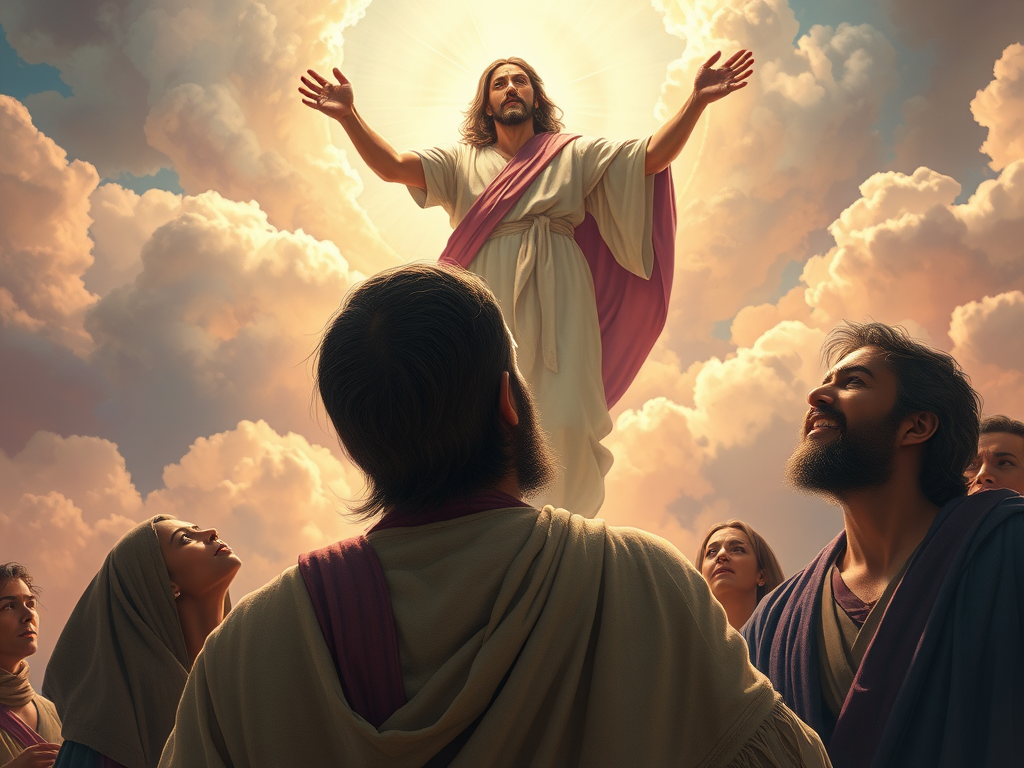
The Apostles See Jesus No More

In the opening verses of the NT Book of Acts, Luke gives us the account of Jesus’ ascension. This is not the only account we have of the ascension in the Bible. In Luke 24:50-52 there is a brief account.

But this passage contains some valuable information which the casual reader may easily miss.

Let’s look at the passage.

6.  So when the apostles were with Jesus, they kept asking him, “Lord, has the time come for you to free Israel and restore our kingdom?”  

6. they kept asking him. Their question shows they thought just as the Jews thought –in terms of a Davidic messiah and an earthly kingdom of Israel free of Roman rule. They were still focused on Israel and its future. It was not about the kingdom of Israel. It was about the Kingdom of Heaven. This would all soon change with the inauguration of the new covenant in Jesus’ blood.

7. He replied, “The Father alone has the authority to set those dates and times, and they are not for you to know.

 The Father alone sets dates, times. Jesus had already told the disciples that the timing of His coming was unknown (Mat 24:36). Only the Father determines the times and seasons.

8. But you will receive power when the Holy Spirit comes upon you. And you will be my witnesses, telling people about me everywhere—in Jerusalem, throughout Judea, in Samaria, and to the ends of the earth.”

But: Grk, G235 alla, contrariwise, emphatic—the disciples will have to think differently—to radically change their mind.

My witnesses: Very soon they will see him no longer because he is going to the Father, where they cannot come (see John 14:28-29). Instead, they are to receive power with the coming of the Holy Spirit and be his witnesses everywhere.  This would be a huge refocus. 

9. After saying this, he was taken up into a cloud while they were watching, and they could no longer see him. 

  • taken up into a cloud. Jesus was hidden from their eyes by a cloud as he went into Heaven. Clouds denote God’s glory. These ‘clouds’ appear to shut heaven, or the sky, from human view. He was hidden from their eyes by cloud. Just as He was hidden from their eyes as He went into Heaven, so when he comes He will be hidden to human eyes by the clouds of glory (Mat 24:30).

10. As they strained to see him rising into heaven, two white-robed men suddenly stood among them. 

they strained to see him. The cloud made it very difficult to see him, then impossible to see him.

two white-robed men. One of the many references to angels in the NT suddenly appearing (cf Luke 24:4 at the empty tomb). 

11. “Men of Galilee,” they said, “why are you standing here staring into heaven? Jesus has been taken from you into heaven, but someday he will return from heaven in the same way you saw him go!”

Jesus has been taken. Note the past tense ‘has been taken’

taken from you. They will see him no longer.

Men of Galilee. Here is aninteresting detail: they were addressed as ‘men of Galilee’. It is they who were addressed and not us today. Context is critically important for correct interpretation.

Jesus will someday return. The two ‘men’ declared Jesus will ‘someday’ return from heaven. The disciples already knew he would soon return (Matthew 10:23, 16:27-28, 24:30), but the hour or the day was unknown (Mat 24:36). This was a confirmation for them.

In the same way. The disciples could not see him because he was hidden by the cloud of glory. In the same way when he returns he will come in clouds of glory again hidden from human eyes in his then ascended form.  

This story shows us today that the coming return of Jesus was to occur within the lifespan of those present, these “men of Galilee”. So it rationally follows that return has already occurred!

This passage and the Matthew 24:30-34 passage, teach us the same thing: Jesus returned within the lifespan of the disciples!  

The coming of Jesus that we read in both Acts 1:6-11 and in the gospels (Matthew 10:23, 16:27-28, 24:30-34) cannot possibly be a “coming” that will occur in our future, for indeed, it has already occurred in the generation of the disciples.

Go figure!

Please prove me wrong.

Rapture? Three Greek Words

Subscribe to continue reading

Subscribe to get access to the rest of this post and other subscriber-only content.