Tag Archives: Kingdom of heaven

The Kingdom of Heaven

What is the Kingdom of Heaven?

It is God’s wonderful rule. It is so good that it is called the good news (gospel) of the kingdom–a desirable state.

It is a lifestyle into which Jesus called his disciples to enter and to live under. It is so precious, so important, that people are urged to enter it, no matter what it may cost (Mat 13:44-45).

Jesus said to his disciples:
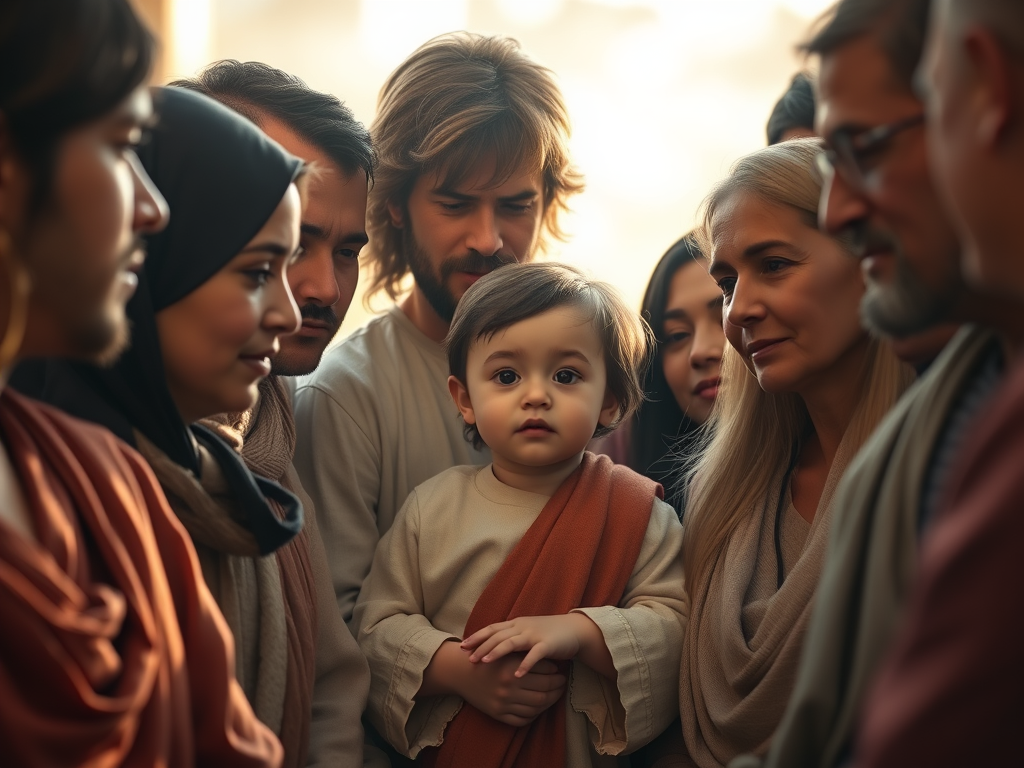
“Most certainly I tell you, unless you turn, and become as little children, you will in no way enter into the Kingdom of Heaven.  Whoever therefore humbles himself as this little child, the same is the greatest in the Kingdom of Heaven. Matthew 18:3-4

Let’s look closely at this passage:

Context:

This passage is part of a larger discourse in Matthew 18, often called the “Discourse on the Church”.”

The immediate context is that the disciples asked Jesus, “Who, then, is the greatest in the kingdom of heaven?” (Matthew 18:1). Jesus responds by calling a little child to stand among them (Matthew 18:2) and then speaks the words in verses 3-4.

Key Words and Phrases:

“Truly I tell you” (Amen lego humin): This term Jesus often used as for a solemn affirmation that what follows is important and true.

“unless you turn and become like little children”: Turning, the first step, is critical. The Greek word for “change” (strepho) can also mean “turn” or “convert.” It implies a fundamental transformation. The requirement is to become like a child.

“you will never enter the kingdom of heaven”: This is a strong statement about the necessity of this transformation for entering the kingdom of h  eaven and the salvation it brings.

“whoever humbles himself like this little child”: The Greek word for “humbling oneself ” (tapeinose) refers to humility, lowliness, or a state of being humble.

“is the greatest in the kingdom of heaven“: Jesus contrasted the world’s view of greatness (power, status) with the kingdom’s view — humility and childlike dependence.

What is it about a little child that Jesus should ask people to become in order to enter this kingdom?

It is humility. Lack of pride. Absence of self-reliance. Total trust in our heavenly Father.

Trust in the Lord with all your heart; do not depend on your own understanding. Seek his will in all you do and he will show you which path to take.

Interpretation

The child is used as an example of humility, trust, and dependence. In the ancient world, children had low social status; they were dependent and without pretension.

Jesus is not saying that adults should be childish (immature) but childlike in their faith — trusting, humble, and without arrogance.

To “become like little children” means to abandon self-sufficiency and pride and to rely completely on God.

The transformation (“turn”) is a necessary condition for entering the kingdom — it is a call to conversion.

The reversal of values: the greatest in the kingdom is the one who is humble like a child.

Theological Themes:

Humility: Essential for discipleship and kingdom citizenship.

Kingdom access: Entry into the kingdom requires a change of heart and attitude.

Greatness in the kingdom: Defined by service and humility, not by power or status.

Application:

As followers of Jesus we must embrace humility and dependence on God.

Christian communities should value and practice humility, service, and care for and honour the weak.  

In the ancient world, children were considered weak and vulnerable. They are still vulnerable today.

Conclusion


Jesus uses a child as an object lesson to teach that humility and childlike trust are essential for entering and being great in the kingdom of heaven.

Today, this teaching still challenges worldly notions of control, power and status and calls for a transformation of the heart.

JESUS’ LITTLE ONES!

The other night we were reading and sharing from Matthew 18. We discovered some startling things that Jesus said to his disciples when they asked him about who would be the greatest in his kingdom.  They did not expect his response, having in mind a realm like the world. He set a little child before them and said,

“Truly I say to you, unless you are converted and become like children, you will not enter the kingdom of heaven.”  (18:3)

There you have it boys.

To ask such a question showed up their need for conversion from attitudes of importance, self-interest and vanity—attitudes totally at odds with the nature of this kingdom. Such a radical change! How could they possibly become like this child? Everyone in their culture knew that little ones were not worth very much, they were totally dependent on their parents for how they thought, what they said and where there would go. Surely he can’t be serious! Surely there must be some hidden meaning here!

They braced for his further explanation, as by this stage they had to expect to be rattled once more (why keep on following this man –is he a man, or what?). . . . well they hardly knew what! Bombshell #25 or was it 27 or 28 coming?

“Whoever then humbles himself as this child, he is the greatest in the kingdom of heaven.”  (18:4)

The kingdom that Jesus constantly spoke about was a kingdom in which the desire to be important cannot exist at all. Humility is the essential key to entering this kingdom. This is utterly different to all other kingdoms, all of which are destined to fail while Jesus’ kingdom will endure forever, replacing all others. To enter it meant a total reversal of their values, to a dependency clearly demonstrated in the vulnerability and helplessness of a little child, a kind of death and new birth.

 “And whoever receives one such child in my name receives me, but whoever causes one of these little ones who believe in me to stumble, it would be better for him to have a heavy millstone hung around his neck, and to be drowned in the depth of the sea.”  18:1-6

Just who are these ‘little ones’?

They heard that if they desired to follow Jesus into his kingdom they must be prepared to undergo a radical change and be childlike. Then in this new status—like a little child—they find a new identity: by being ‘little ones’ they would become his agents bringing his message—so amazing that whenever they act for him, then whoever they meet who receives them, it is as if they are receiving Jesus! And conversely, when people come against them, the little ones, Jesus ones who believe, and place stumbling blocks in their path as they carry the kingdom message, the judgment on these would be severe.

“Woe to the world because of its stumbling blocks! For it is inevitable that stumbling blocks come; but woe to that man through whom the stumbling block comes!  (18:7)

Following Jesus they (and we) can expect many stumbling blocks—the original word is scandalizomai. Whose side do they want to be on? One will join the other side and betray him. Whose side do YOU who reads want to be on? The scandalized or the scandalizers?

This is another step in the training of his emissaries and though there be stumbling blocks to trip them up, impede their progress, Jesus wants them to know the out-of-this –world benefits, the glories, the exaltedness they could expect by humbling themselves under Jesus’ leadership, his easy yoke, his light burden.

And there’s more.

See that you do not despise one of these little ones, for I say to you that their angels in heaven continually see the face of My Father who is in heaven.” (10)

They must treat other little ones with honour because—think about it—they have angels in the heavenlies who never stop having face to face communication with Jesus’ Father. Wow. Imagine such guidance and protection.

Let’s say that again. You who have humbled yourselves under the Master’s command have the unfathomable privilege and continuous protection of God’s angelic hosts! So never despise any of the little ones!

There are the despisers and the despised. The scandalizers and the scandalized.

Then Jesus told a story of the 100 sheep and searches for the single straying one.  Then finding it, he rejoices over that single one more than over the others. He cares for every single one of us as if each were the only one!

So it is not the will of your Father who is in heaven that one of these little ones perish. (14)

Only believe! Believe you are a little one. Accept your new status as a little one. And watch!