Monthly Archives: May 2026

In Just a Little While

Hebrews 10:37: “In just a little while, He who is coming will come and will not delay.”
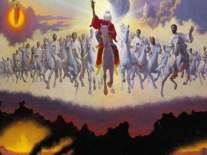
In just a little while

Here we read about the imminence of the event being described. The author of Hebrews is quoting from Habakkuk 2:3, which speaks of the certainty and timing of God’s promises.

God is the One who is utterly reliable and true. His promises will never fail. He is utterly trustworthy. “Heaven and earth will pass away but my words will never pass away” Jesus said (Mat 24:35).

This phrase “in just a little while” reminds us of the early Christian belief in the imminent return of Christ, a very frequent theme (over 100 occurrences) In the New Testament.

This is an urgent message for these readers. This urgency is meant to encourage them to remain steadfast in their faith and to live in anticipation of Christ’s return.

He who is coming

This affirms the certainty of Christ’s return—not as a distant hope, but as a divine promise fulfilled in God’s own time. Certainly not in thousands of years but within the generation of these people.

Jesus Christ is the central figure of Christian eschatology. The expectation of His return is a foundational Christian doctrine. This phrase connects to other New Testament passages such as Mat 24:30 and Rev 1:7, which describe the imminent return of Jesus in glory.

The anticipation of his coming served as a source of hope and motivation for these first century believers to persevere in their faith.

will come

The certainty of Christ’s return is underscored here for the readers of this letter. The use of “will come” affirms the promise made by Jesus himself in John 14:3, where he assured his disciples of his return. This assurance was meant to provide comfort and encouragement to these believers who were facing trials and persecution. Their faithfulness will be rewarded.

and will not delay

This phrase reinforces the idea that God’s timing is perfect and that his promises will be fulfilled quickly. God’s plan unfolds according to his divine schedule. In 2 Peter 3:9 the apostle explains that the Lord is not slow in keeping his promise, but is patient, allowing time for repentance. The assurance that he “will not delay” serves to strengthen the resolve of these believers to remain vigilant and faithful.

God’s timing is not procrastination, but purposeful. He does not deceive or delay out of indifference; He acts when it is most fitting for His people.

Jesus had told his disciples he would come within their generation (Mat 10:23, 16:27-28, 24:14, 24:34).

Rev 22:12. “Look, I am coming soon, bringing my reward with me to repay all people according to their deeds: Reinforces the promise of Jesus’ return and the rewards He brings.

Matthew 24:44. Encourages readiness for the unexpected timing of Christ’s return.

James 5:8. Urges believers to be patient and stand firm because the Lord’s coming was near.

2000 years?

Application

• For Early Christians: This was a message of hope amid suffering. The destruction of Jerusalem (AD 70) may have been the fulfilment of this “little while,” marking divine judgment on unbe-lief and deliverance for the faithful.

• For Modern Believers: The call remains to live enduring trials through faith. It challenges be-lievers to live faithfully—loving, serving, and standing firm. We know that since Christ’s return is certainly past we rejoice in in God’s economy.

Key Insight:

The “little while” is not about how long it would be, but about God’s faithfulness. He has come. He did not delay—he came on time as He promised and right on time.
He Could Not Be Seen!

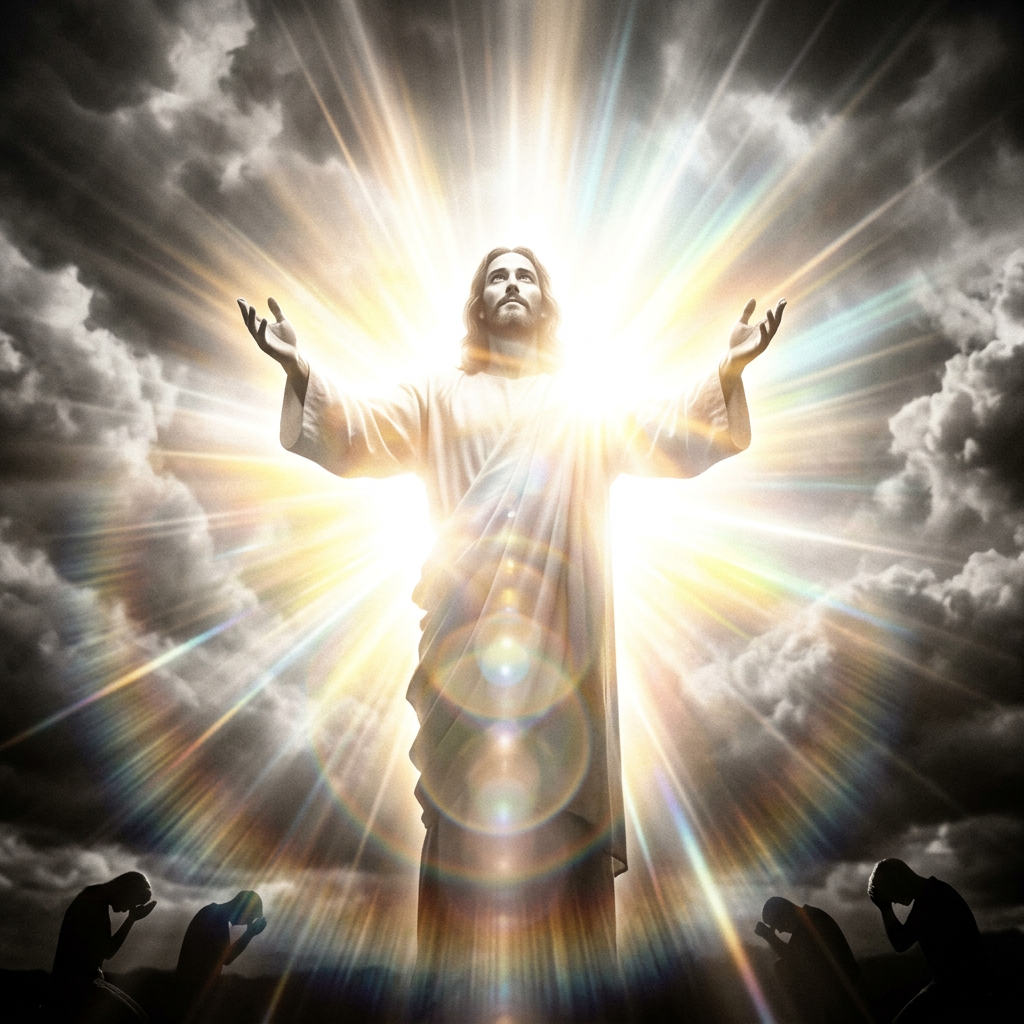
Many Christians believe in a future second return of Jesus. They hold that he will be seen optically in a future coming on the clouds.

But in this article I show that would be impossible.

First, I present a critical explanation of 1 Timothy 6:16, breaking down its components and significance within its context:

“who alone has immortality, who dwells in unapproachable light, whom no one has ever seen or can see. To him be honour and eternal dominion. Amen.”

 Context

  1. This verse concludes a majestic doxology (hymn of praise) about God (vv. 15-16) within Paul’s final exhortations to Timothy.
  2. The doxology itself is part of a larger charge to Timothy to fight the good fight of faith, keep the commandment unstained, and avoid the love of money (vv. 11-21).
  3. It directly follows the description of God as “the blessed and only Sovereign, the King of kings and Lord of lords” (v. 15).

Exegesis of Key Phrases

  1. “who alone has immortality”:
  1. Immortality (Grk-athanasia): Literally “deathlessness.” This signifies God’s essential nature. He is inherently eternal, without beginning or end, and utterly independent of the created order. Unlike created beings (angels or humans granted immortality), God is immortal in His very being. In fact, He is the source of all life and immortality (cf. 1 Tim 1:17, Rom 1:23).
  2. “Alone” (Grk-monos): This is emphatic. It distinguishes God absolutely from all created beings. No other entity possesses immortality as an inherent, un-derived attribute. This underscores God’s unique deity.
  3. “who dwells in unapproachable light”:
  1. “Dwells” (Grk-oikōn): Indicates God’s permanent, essential habitation, natural environment.
  2. “Unapproachable light” (Grk-phōs aprositon):
  3. Light (Grk-phōs): Throughout Scripture, light is a primary symbol of God’s holiness, purity, glory, truth, and revelation (Ps 104:2; Isa 60:19-20; John 1:4-5, 8:12; 1 John 1:5). It represents His utter moral perfection and radiant majesty.
  4. Unapproachable (Grk-aprositon): This is the key descriptor. It means inaccessible, impossible to draw near to or enter into. Why?
  5.       Holiness: God’s absolute purity and holiness are so overwhelming that sinful humanity cannot endure or approach directly (Ex 33:20; Isa 6:1-5; Hab 1:13).
  6.       Glory: The sheer brilliance and majesty of His being are beyond human capacity to withstand or comprehend.
  7.       Transcendence: God is wholly “other,” distinct and separate from His creation. His essential being is hidden from direct human perception. The light is not just bright; it is inherently inaccessible to mortal, sinful beings. That’s us.
  8. “whom no one has ever seen or can see”:
  1. This statement reinforces the concept of God’s unapproachable light and transcendence.
  2. “No one has ever seen”: While theophanies (appearances of God) occurred in the Old Testament (e.g., to Moses, Isaiah), these were manifestations mediated in a way that protected the human recipient (e.g., seeing God’s “back,” covered by seraphim, or veiled in cloud/fire – Ex 33:18-23; Isa 6:1-7). They did not constitute seeing God’s essential, unveiled being.
  3. “Nor can see” (Grk-oude idein dunatai): This is a present impossibility for humans in their current state. God’s essential nature remains hidden from direct sight due to both His infinite holiness and our inherent finitude and sinfulness. This phrase definitively states that direct, unmediated vision of God the Father is impossible for humanity (cf. Jn 1:18, 6:46; 1 Jn 4:12).
  4. Christological Implication: While affirming the Father’s essential invisibility, the New Testament simultaneously proclaims that Jesus Christ, the Son, is the visible image of the invisible God (Col 1:15; Heb 1:3) and the one who has made Him known (Jn 1:18, 14:9). This verse does not contradict those truths; it highlights the Father’s transcendence and the Son’s unique role as Revealer.
  5. “To him be honour and eternal dominion. Amen.”:
  1. Doxology: This concluding cry of worship flows naturally from the preceding description of God’s unique majesty, holiness, and transcendence.
  2. “Honour” (Grk-timē): Refers to reverence, respect, glory, and worthiness of worship due to God alone based on His attributes.
  3. “Eternal Dominion” (Grk-kratos aiōnion): Affirms God’s everlasting, absolute sovereignty and power over all creation, time, eternity. He is the “King of kings and Lord of lords” (v. 15).
  4. “Amen”: A solemn affirmation and agreement with this declaration of praise.

Significance & Application

  1. Affirms God’s Unique Deity: This verse powerfully declares God’s absolute otherness, self-existence, immortality, and holiness. It combats any view that diminishes God’s transcendence or uniqueness.
  2. Highlights Human Limitation & Need for Mediation: It starkly reminds humanity of its creaturely finitude and sinful state, which makes direct approach to the holy God impossible. This underscores the essential necessity of a mediator – Jesus Christ (1 Tim 2:5).
  3. Points to Christ: While emphasizing the Father’s invisibility, it implicitly points to the revelation of God in Jesus. We know and approach the Unapproachable through Christ (Heb 4:14-16, 10:19-22).
  4. Inspires Worship and Awe: The description of God’s majesty and holiness is meant to evoke reverent worship, awe, and submission (“To him be honour…”).
  5. Provides Comfort in Sovereignty: Affirming God’s “eternal dominion” assures believers that despite present circumstances, the utterly transcendent and holy God is ultimately and eternally sovereign.
  6. Contextual Purpose: In the letter’s context (warning against false teachers and greed), this doxology refocuses Timothy (and the church) on the true, majestic, holy God – the ultimate object of faith and source of life – contrasting sharply with the temporal, corruptible things (like wealth) that false teachers might peddle or that believers might wrongly pursue.

Of course, at His first coming Jesus was revealed as the image of the invisible God:

Hebrews 1:3   And He is the radiance of His glory and the exact representation of His nature, and upholds all things by the word of His power. When He had made purification of sins, He sat down at the right hand of the Majesty on high,

John 14:9  Jesus said to him, “Have I been with you for so long a time, and yet you have not come to know Me, Philip? The one who has seen Me has seen the Father.

John 14:16-17. I will ask the Father, and He will give you another Helper, so that He may be with you forever,the Helper is the Spirit of truth, whom the world cannot receive, because it does not see Him or know Him; but you know Him because He remains with you and will be in you.

In essence, 1 Timothy 6:16 is a profound statement of God’s unapproachable light and transcendence. When Jesus returned in 70 AD, He could not be seen. What could be seen visibly was the destruction of Jerusalem and the whole system of the Mosaic Sinai Covenant.