Tag Archives: theology

The Timing of Jesus’ Return

This article discusses what the New Testament says about the timing of Jesus’ second coming.

We are often reminded by teachers that Jesus said “about that day or hour no one knows, not even angels in heaven, nor the Son, but only the Father” (Mat 24:44) as if that should end any further discussion.

But there are a surprising number of passages referring to the timing of his coming. Let’s check them out.

First. Matthew 10:23. “But when they persecute you in this city, flee to another. For assuredly, I say to you, you will not have gone through the cities of Israel before the Son of Man comes.”

Jesus was speaking to his disciples as he sends them out to preach and heal in their mission to the Jews. 

The phrase “the Son of Man comes” is a clear reference to Jesus’ Second Coming. Jesus was telling his disciples that their mission will not be completed before his return, and that they should not be discouraged by persecution, but instead to flee to another city of Israel and continue their work. They are only to go to cities of Israel, to Jews, not to Gentiles.

This passage also emphasizes the urgency of the disciples’ mission, as they are to proclaim the gospel in all the cities of Israel before the Son of Man comes, a huge task taking several decades. The time was very short and that they must work to spread the message before it is too late for the hearers to repent and believe the gospel. We read about this activity in Acts, Paul preaching first to the Jews.

This is a 1st century Jewish setting and cannot fit any other historic period, let alone 2000 years in future.

Second. Mat 16:27-28. 27 “For the Son of Man is going to come in his Father’s glory with his angels, and then he will reward each person according to what they have done.  “Truly I tell you, some who are standing here will not taste death before they see the Son of Man coming in his kingdom.”

Jesus was speaking to His disciples and making a profound statement about His Second Coming and the final judgment. This is a 1st century setting and cannot possibly fit any other future historic period.

Though some interpret this as referring to the Transfiguration (Mat 17:1-8), where 3 disciples witness Jesus in a glorified state. That was an important preview of Christ’s role as supreme prophet and king. But there was no mention of his Return or judgment and it was only a few days after the Matthew 16 statement.

Third. Mat 23:38-39. ‘Look, your house is left to you desolate. For I tell you, you will not see me again until you say, ‘Blessed is he who comes in the name of the Lord.’

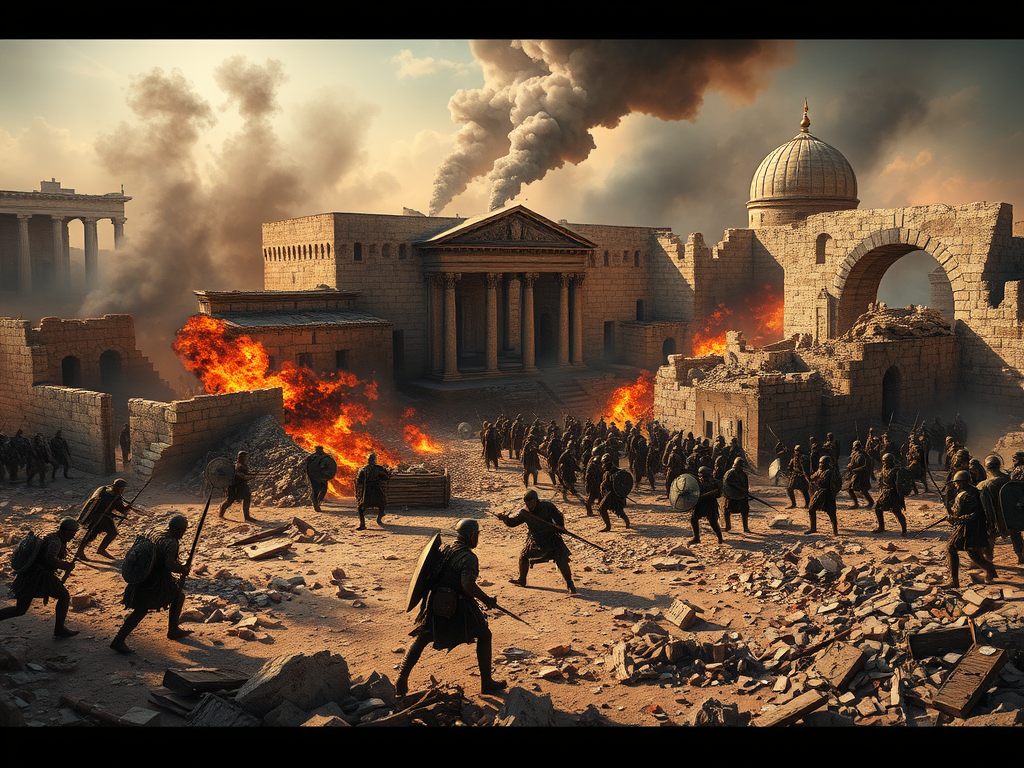
Jesus declared that the temple will be left desolate, abandoned.—a prophecy of its destruction which we know came by the Romans in 70 AD. Jesus’ body will replace the temple (see John 2:13-21).

The people of Jerusalem will not see Jesus again until they acknowledge and bless the one who comes in the name of the Lord—Jesus himself, as the One who was to return. The Jews will not recognize him as such until they use this phrase to greet him. This was spoken only a few days before they crucified him.

Fourth. Mat 24:14. And this gospel of the kingdom will be preached in all the world (Greek oikoumenē) as a testimony to all peoples (Greek ethnos), and then the end will come.

Jesus was speaking to His disciples discussing the signs of the end and His coming and on the spread of the gospel before the end of the age; the time of his return is linked to the completion of their task.

Note Strongs G3525 oikoumenē can exclude ‘whole earth’ e.g., Luke 2:1, Luke 21:26, Acts 24:5, Rom 10:18.  

Note also Strongs G1484 ethnos can meana company, troop, swarm, people group not just ‘nations’

Fourth. Mat 24:15-20:  when you see standing in the holy place ‘the abomination that causes desolation’ . . . .  then let those who are in Judea flee to the mountains . . . Pray that your flight will not take place in winter or on the Sabbath.

Jesus said the disciples would see the Abomination of Desolation the signal to get out of Judea and escape the Great Tribulation. Note the reference to Sabbath and the limits of travel—all purely a Judean context.

Fifth. Mat 24:32-34. “ . . . . lesson from the fig tree: As soon as its twigs get tender and its leaves come out, you know that summer is near. Even so, when you see all these things, you know that it is near, right at the door. Truly I tell you, this generation will certainly not pass away until all these things have happened.

‘All these things’ they see include the Abomination of Desolation, the Great Tribulation, the destruction of the temple and the sign of the Son of Man in the heavens and his return must have happened. If they did not happen then Jesus was at best mistaken (a decision reached by C S Lewis) or worse a false prophet.

The word ‘near’ and the phrase ‘right at the door’ can only mean his coming was quite imminent. It cannot possibly mean centuries in the future. It must be within the generation of his hearers, the disciples.

Sixth. Mat 24:44. “about that day or hour no one knows, not angels . . . nor the Son, but only the Father”

Notice Jesus used the terms hour or day of his coming—not that year, century or millennium.

Seventh. Acts 1:10-11.  After he said this, he was taken up before their very eyes, and a cloud hid him from their sight. They were looking intently up into the sky as he was going, when suddenly two men dressed in white stood beside them. The two men in white said to the disciples “This Jesus, who has been taken up from you into heaven, will come in just the same way as you have watched Him go into heaven.

taken up before their eyes into a cloud: They quickly lost sight of him straining to see him, because it was not a rain cloud but a cloud of God’s glory—see Dan 7:13, Mat 17:5-8, 24:30, 26:63-64;, Rev 1:7, Rev 11:12.  

just the same way as: This Greek construction occurs in Mat 23:37. Greek tropos: like as, in the same way.

How often I have wanted to gather your children together as a hen protects her chicks beneath her wings . . .

Jesus said he was like a hen–not a hen! Jesus’ return is similar to his departure. He disappears in the cloud and when he returns he will come hidden in clouds of God’s glory, clouds hiding him like when he left.

When he came in judgment destroying the Temple he came in the clouds, just as He promised (Mat 24:30), and just as the same clouds of glory that shrouded Him as He ascended. Why should people  believe that he could be seen bodily, he who dwells in the splendour and glory of Almighty God?

This passage strongly suggests that his coming was to occur within the lifespan of those present. His coming is not a “coming” that will occur in our future, for indeed, it has already occurred.

How could the apostles be so sure?

There are over one hundred passages in the apostles’ letters showing how the first believers were more than confident of his return in their lifetime. Just as these ‘timing’ passages confine Christ’s Second Coming to the first-century generation, they saw the end of the age squarely in that generation as well. See e.g.

-Phil 3:20.  . And we are eagerly waiting for him to return as our Savior.

-Titus 2:11f. we wait for the blessed hope—the appearing of the glory of our great God and Savior, J

-2 Thes 2:1.  . .  about the coming of our Lord Jesus Christ and how we will be gathered to meet him.

James 5:8-9. You too, be patient and stand firm, because the Lord’s coming is near. Don’t grumble against one another, brothers and sisters, or you will be judged. The Judge is standing at the door!

I conclude: Jesus must have already returned!  Please comment and explain if you are unconvinced

Let’s look at the ‘Rapture’ Passage

1 Thessalonians 4:16-17

For the Lord himself will come down from heaven, with a loud command, with the voice of the archangel and with the trumpet call of God, and the dead in Christ will rise first. 17 After that, we who are still alive and are left will be caught up together with them in the clouds to meet the Lord in the air.

The Lord descends from heaven

Paul expected the Lord to descend but he was silent as to just where. Not the earth, and certainly not to Jerusalem.

Who are the ‘still alive and remain’?

The word ‘and’ is not in the original text. That could mean the ones who are still alive will remain in the world and not taken away supernaturally (see John 17:15). Or the term “remain” could also indicate those who continue to hold on to their faith despite trials and tribulations.

What does ‘caught up’ mean? 

The phrase “caught up” (Greek harpazō) and derivatives occurs 14 times in the New Testament. It can mean to seize (John 6:15), catch, pluck (John 10:28), pull, forcibly take (Mat 12:29, Acts 23:10). It does not have to mean “up”. The YLT translates the Greek harpagesomethain 1 Thes 4:17 as “caught away.” Does it convey the sense of any abduction here? No, “it combines the ideas of force and suddenness seen in the irresistible power of God” (Leon Morris, Tyndale New Testament Commentaries, Rev Edition, 1984, p. 94).

Paul wrote to the Corinthians of his experience of being “caught up (or away) to Paradise” (2 Cor 12:2-4). He told them about a supernatural experience he had fourteen years prior –that’s around AD 41-42. He describes being caught up to the third heaven, the dwelling place of God and angels, hearing things that cannot be revealed. He was caught into the spiritual realm. But he remained on the ground.

Meaning of ‘in clouds’

Not the clouds we see daily in the sky, but clouds of God’s glory in the spiritual realm—see Daniel 7:13, Matthew 17:5-8, 24:30, 26:63-64, Acts 1:9, Rev 1:7, 11:12, etc.  The text in v17 mentions clouds and air for the meeting site, not Earth. Note also that heaven is not mentioned—simply “in the clouds.” The destination of this “forceful catch” must be supplied by the larger biblical and theological contexts.

Meaning of ‘to meet the Lord’

The word Paul used for meet is very significant. The Greek apantēsis occurs only four times in the NT. The other places are Matthew 25:1 and 6 and Acts 28:15.

Matthew 25:1, 6. . . . . .  ‘Look the bridegroom is coming! Come out and meet him

When Christ returns they will not rise up into heaven from where he came, but will be escorted to earth where he will set up his eternal spiritual kingdom.

Acts 28:15a. [They] had heard we were coming and they came to meet us at the Forum . . . .

They did not go back to where Paul had come from, then disappear for years.

The Greek word used for ‘meet’ is most often synantó. However apantēsis is used by Paul. In the papyri it describes a newly arriving magistrate. “It seems that the special idea of the word was the official welcome of a newly arrived dignitary” (Moulton, Greek Test. Gram. Vol. I, p. 14). The citizens of the city would go out to meet the dignitary and joyfully bring him back with them to the city, not back to where he came from.

The dignitary in Mat 25 is the bridegroom (Jesus) and in Acts 28 it is Paul. But in 1 Thes 4:17 it is the Lord. This ‘meeting’ is not up in heaven but movement across the land on earth and not upwards is indicated!

In the gospels we read about many followers of Jesus went outside the city of Jerusalem with palm branches to greet Jesus as he entered the city. This was the ancient custom in welcoming someone important by going out and then escorting them back into the city.

What is meant by ‘air’                                                                                       

The Greek word aer is not the air we breathe but the spiritual realm. See also Ephesians 2:2 in which satan is described as the ‘prince of the power of the air’. In that spiritual realm both those raised, together with those remaining at his coming will be with the Lord forever.

The word aer is infrequent in the NT. Paul could have used the Greek οranos which has a different meaning than aer.  The word aer refers to the lower, dense air as distinguished from the higher and rarer air, the “heavens” as οranos can also be translated heavens, heavenly, and heaven (218 times).  Paul chose to use the word that refers as a rule to the lower atmospheric region—where people live and breathe!

It’s time to think logically, rationally

If all the apostles believed in a literal ‘rapture’ event, it would be mentioned in all of their letters. But out of all the over 100 references in the NT which mention Jesus’ imminent return, only this letter, mentions anything like a so-called ‘rapture’. Surely that is enough evidence to show that this teaching is spurious.

If I tried to make a teaching that was based on just one passage in the New Testament I would be mocked, ridiculed and ignored.

Since 1 Thessalonians 4:17 is the only clear and direct reference rapture teachers can use, why do people accept it? Peer pressure? If 90% of Christians believe it, then it must be OK? Whole denominations, churches, bible colleges, pastors, authors, movies seemingly deploy any manner of manipulative, dramatic emotionalising in order to promote this notion. There’s a price to pay if one dares to go against the mob. You can be called crazy, a heretic, or be excluded from fellowship, or lose friends. I speak from experience.

Are you expecting Jesus to return? That is logically impossible if you trust Paul’s letters are the Word of God. If his coming was near, soon, for Paul’s readers, how can it near for us?

The Man of Lawlessness

Introduction

Shortly after writing 1 Thessalonians, the apostle Paul received a report (2 Thess. 3:11) that the Thessalonian church had accepted the strange claim that “the day of the Lord has come” (2:1–2). Paul sent them a second letter in A.D. 49–51. He was probably in Corinth at the time. This letter was addressed to the Thessalonians.2000 years ago when these people and Paul were expecting Jesus’ imminent return in their lifetime. It was seriously relevant to the Thessalonians. It is not relevant for us as 2000 years have passed but it useful for our studies and the truth is always relevant.

2 Thessalonians 2:1-9

  1. Now, dear brothers and sisters, let us clarify some things about the coming of our Lord Jesus Christ and how we will be gathered to meet him.
  2. Don’t be so easily shaken or alarmed by those who say that the day of the Lord has already begun. Don’t believe them, even if they claim to have had a spiritual vision, a revelation, or a letter supposedly from us. 3 Don’t be fooled by what they say. For that day will not come until there is a great rebellion against God and the man of lawlessness is revealed—the son of destruction.

Paul here assured the Thessalonians that a great rebellion against God and therevealing of a man who opposes God and exalts himself above everything that is called God must occur before Jesus’ return. Jesus told the disciples in the Olivet discourse (Mat 24:10-12) about this falling away.

4 He will exalt himself and defy everything that people call god and every object of worship. He will even sit in the temple of God, claiming that he himself is God.

Paul described this “man of lawlessness” as being empowered by Satan, performing signs and wonders, and deceiving many (verse 9).

Who was this son of destruction? Was it the Roman general Titus who entered the Jerusalem temple?

Josephus wrote that Titus entered the Holy of Holies with his generals in A.D. 70. (Wars, 6.4.7.) Shortly thereafter, Titus was worshipped in the Temple as was customary of someone declared imperator. As Josephus wrote, “And now the Romans . . . brought their ensigns to the temple and set them over against its eastern gate; and there did they offer sacrifices to them, and there did they make Titus imperator.”(Wars 6.6.1)  A metallic image of Vespasian and Titus was also worshipped at that time. Images of the emperor and his favourites were regularly attached to the Roman ensigns at that time. 


5. Don’t you remember that I told you about all this when I was with you? And you know what is holding him back, for he can be revealed only when his time comes.

Jesus had spoken about these things to the disciples in the Olivet discourse, Matthew 24:15-16: “So when you see the Abomination of Desolation spoken of by the prophet Daniel, standing in the holy place, then those who are in Judea must flee to the mountains”. Daniel, during the Babylonian captivity, had written about this happening just before His return. Jerusalem and the temple were to be destroyed and countless numbers of Jews would perish at the hands of the Romans.

Paul had told the Thessalonians about all this when he visited them previously. They already knew so he didn’t have to repeat what he had said. But Paul didn’t repeat it in this letter so it is difficult for us to know what was ‘holding him back’ from his appearing. We are left to assume that Paul never bothered to record this information in writing.


7 For this lawlessness is already at work secretly, and it will remain secret until the one who is holding it back steps out of the way. 8 And then the lawless one will be revealed, whom the Lord Jesus will overthrow with the breath of his mouth and destroy by the splendour of his coming. 9 The coming of the lawless one will be in accordance with how Satan works. He will use all sorts of displays of power through signs and wonders that serve the lie

Paul wrote to them about this lawlessness being already at work—the hidden, evil Satanic forces at work in the world opposed to God and His people.

So who or what is the one holding the man of lawlessness back? Many attempts have been made to identify this person or entity.

I believe the only possible explanation is that God is the restrainer, as He is the only one who can restrain Satan. God restrains evil and eventually turns unrepentant sinners over to indulge in evil (Romans 1:20-24, 26, 28). And Job reveals that God prevents Satan from certain activities (Job 1:10-12). Only God can restrain evil and the man of lawlessness.  

Paul said the one who is holding it back would step out of the way. When that would occur then the man of lawlessness would be revealed and the Lord Jesus would overthrow him and destroy him by the splendour of his coming. 

But does it really matter that we today know the identity of the one who Paul believed restrains him? That wasn’t Paul’s issue in this letter. His concern was that the Thessalonians were worried they had missed the Lord’s coming and to reassure them that they would not miss out.

We may be curious of course. And for those today, even after 2000 years, who believe the Satanic lie that Jesus is yet to return, it arouses a lot of comment. The man of lawlessness has indeed been revealed and the Lord Jesus long ago overthrew him.

You Ignore My Son

“You have ignored my Word, my plan, my purpose. Above all you have ignored my Son. My Son, who has given His life for you, my Anointed One, in whom are hidden all the treasures of wisdom and knowledge.

You have not listened but have continued with your traditions and useless religious programmes.

You have ignored what He taught, what He demonstrated as your example, to follow Him and His lowliness.

You have ignored His way, neglected His power always available from the Holy Spirit.

What did my Son start on the earth? What did he command his followers?

Make disciples!

Instead you have trusted in what the world has to offer. How can you treat Him like this? You should be ashamed of your apathy, of your lifeless sermons, keeping your seated membership in ignorance and in straightjackets, bound up in practices I never intended.

Who told you to build ‘churches’?—that word is an abomination to me.

You give yourselves a name, an identity, a constitution, an incorporation. You build buildings and spend money on things that are perishing. You rely on money and serve it as your master when I have called this Mammon and warned you that you cannot serve me and mammon at the same time.

Like the world, you use their marketing strategies, and thus compete with rival pathetic pseudo-religious corporations. You appoint CEOs and call them ‘senior pastors’. Where is this in the teaching of my Son or in the doctrines of the apostles?

Like the world, I see jealousy, ambition, merchandise, control, titles, vainglory.

You try hard to follow me in YOUR way but not in MY way. So you end up doing it YOUR way.

You strive when my yoke is easy, my burden light. You are labouring for wages and not out of love for me.  

You ignore Truth and prefer to believe lies like expecting some future rapture experience after my Son actually returned 2000 years as He promised!

And the lie that you believe about this nation you call Israel when you are the chosen race, the holy nation, My own people.

Yet I still love you even as you ignore me, as my love for you is forever and inexhaustible.”

Peter’s Jerusalem Temple Speeches

In this article we look at part of Peter’s great speech recorded by Luke in Acts 2:14-21. This event was the inauguration of the New Covenant which took place in Jerusalem during the Jewish feast of Pentecost when thousands of Jews from many countries joined the locals. The New Covenant means the END of the Old Covenant! Forget Israel. Forget Jerusalem!  Luke 2:14-21:

Then Peter stepped forward with the eleven other apostles and shouted to the crowd, “Listen carefully, all of you, fellow Jews and residents of Jerusalem! Make no mistake about this.  These people are not drunk, as some of you are assuming. Nine o’clock in the morning is much too early for that. No, what you see was predicted long ago by the prophet Joel: “And it shall come to pass in the last days, said God, I will pour out of My Spirit on all flesh: and your sons and your daughters shall prophesy, and your young men shall see visions, and your old men shall dream dreams: And on My servants and on My handmaidens I will pour out in those days of My Spirit; and they shall prophesy: And I will show wonders in heaven above, and signs in the earth beneath; blood, and fire, and vapour of smoke:  The sun shall be turned into darkness, and the moon into blood, before the great and notable day of the Lord come: And it shall come to pass, that whoever shall call on the name of the Lord shall be saved”.

V 16. Joel’s prediction

Peter was referring to the phenomena of supposedly drunken people which was the evidence of the pouring out of the Holy Spirit on the 120 disciples gathered in Jerusalem on the Day of Pentecost. He affirmed that “this” supernatural phenomena was the fulfilment of Joel’s prophecy (Joel 2:28) in the Old Testament. Fulfilment means fulfilment. Done.

The Book of Acts goes on to this describe how was fulfilled: God certainly poured out his Spirit on all sorts of people–sons and daughters prophesied, young men saw visions and old men had dreams: Even on servants and handmaidens, God poured out His Spirit in those days. Luke describes many stories of miraculous healings and many other astounding gifts of the Holy Spirit.

This was the inauguration of the New Covenant which we enjoy to this day with the continued pouring out of the Holy Spirit. It was the birth of the movement we call Christianity. It marks the change from the Old Testament to the New Testament. And from a focus on the Jews and Israel as a piece of land to the true focus of the Israel of God—the ekklesia, spiritual Israel. This is exactly what Jesus spoke about to the Samaritan woman in John 4:

“. . .  it will no longer matter whether you worship the Father on this mountain or in Jerusalem.  . . . .   But the time is coming—indeed it’s here now—when true worshipers will worship the Father in spirit and in truth. The Father is looking for those who will worship him that way. For God is Spirit, so those who worship him must worship in spirit and in truth.

V 17. the last days. The biblical writers used these expressions “the last days” or “the end” to mean the last days of the Jewish economy and the end of the Mosaic religious era and the time of the second coming of the Son of Man and the day of God’s wrath.  They did not mean the end of the world. Not the end of history.

Vs 19-20. Some think that verses 19 and 20 are describing the results of global nuclear war as they believe they are living in the last days. They are sorely mistaken because the New Testament records that Jesus promised his disciples that he would come again before his generation has passed away as recorded in Matthew 16:27-28 and 24:34).

These verses 19-20 describe the signs of the coming of the Son of Man in the familiar terms of judgment using non-literal expressions.  This was a common motif we find in the Old Testament prophets —the collapsing of cosmic entities in their judgment prophecies, e.g. Isa 13:10, 19:1,24:18-20, 34;8-15, Ezek 32:7–8; Joel 2:28).

These cosmic signs are not descriptions of the results of global nuclear war or the end of the world. These would take place ‘before the great and notable day of the Lord comes.’ So what great and notable day is this? The answer is found in the next chapter of Acts (3:18-21).

We find Peter addressing another crowd curiously attentive after the healing of the crippled man and the ensuing sensation:

But God was fulfilling what all the prophets had foretold about the Messiah—that he must suffer these things. Now repent of your sins and turn to God, so that your sins may be wiped away.  Then times of refreshment will come from the presence of the Lord, and he will again send you Jesus, your appointed Messiah. For he must remain in heaven until the time for the final restoration of all things, as God promised long ago through his holy prophets.

Fulfilling the prophecies. Because God now at last was fulfilling the prophecies told about Jesus, this was the most significant time in Jewish history and for the whole world as well. All was fulfilled! (also see Luke 21:20-22).

Repent. Their repentance would guarantee the presence of the Lord in their lives. No more squeezing stale refreshment from the Law or the sacrificial system. Now they would experience wonderful refreshment from the presence of the Lord in their lives. Relationship not religion.

God will again send you Jesus. God will again send Jesus to redeem them. Peter addresses them, ‘you’ (not us today). He wil gather his people back to himself and that will be the completion of His atoning sacrifice. See Hebrews 9:11-15 and 27-28: He will appear a second time, not to deal with sin, but to bring salvation to all who are eagerly waiting for him. His re-appearance means completed salvation—just as the appearance of the Jewish high priest on the Day of Atonement meant the sacrifice was successful.

He must remain in heaven until. So there was still more to come for those believers—God will again send them Jesus for the final restoration (Greek apokatastasis), completion, or filling up of all things, as God promised long ago through his prophets (Deut 18:19).

For us today as we read Luke’s account this apokatastasis is long past. For He did return as He promised His disciples (Mat 10:23, 16:27-28, 24:30-34. This assured His people of a completed atonement.

If you doubt His second coming then you should be pleased that He came 2000 years ago to complete your salvation. Good news!

But if Jesus did not come in the generation of Peter and his listeners, then that’s bad news—you still await the consummation, your completed salvation.

Jesus Has Come

Jesus came back within the generation of his peers!

Please look up and study very carefully Matthew 24 :32–34.

And when you’ve studied this passage carefully, perhaps you will come to a different opinion when you can understand that Jesus came back within the lifetime of many of his contempories.

Was Jesus mistaken? The esteemed writer C S Lewis said Jesus was mistaken! Jesus did not come back as he said (See his book “The World’s Last Night”). That is also the view of many liberal scholars and Islamic writers. This discredits Jesus. They fail to look at the rest of the New Testament.

Christ has already come back long ago. He came at the ‘end of the age’ i.e., the end of the Jewish (Mosaic) age, the end of the Old Covenant. It was NOT the end of the world or the end of history. It was the end of Judaism. Jesus came when Jerusalem and the Jerusalem Temple were utterly destroyed (the great tribulation). It was a divine visitation. 

This is just unbelief period, plain and simple. This unbelief is so dishonouring of our Lord. it must break his heart. Of course, he is so forgiving. That’s amazing.

Let’s think about Peter, James and John listening to Jesus, when He spoke of the sign of Jesus’ coming:

 30 And then at last, the sign that the Son of Man is coming will appear in the heavens, and there will be deep mourning among all the peoples of the land. And they will see the Son of Man coming on the clouds of heaven with power and great glory. 31 And he will send out his angels with the mighty blast of a trumpet, and they will gather his chosen ones from the four winds—from the end of the sky to the other. 32 Now learn a lesson from the fig tree. When its branches bud and its leaves begin to sprout, you know that summer is near. 33 In the same way, when you see all these things, you can know his return is very near, right at the door. 34 I tell you the truth, this generation will not pass from the scene until all these things take place.  (Matthew, 24:30-34)

How did these disciples and other apostles such as the apostle Paul respond to this information? That’s very easy! We can tell how they responded by their writings in the NT. They wrote unaminously of Jesus’ coming using terms like “right at the door,” “soon,” “near” and “at hand”. These do not mean 2000 years.

Right?

The first believers “waited eagerly” for his appearing (1 Cor 1:7-8, Gal 5:5 , Phil 3:20, 2 Tim 4:8, Heb 9:26-28).

Question: But could the disciples have possibly thought that by ‘generation’ Jesus meant something else far into the future, like some today who twist the scriptures saying that ‘generation’ here meant ‘race’ (the Jewish race) or others that say that by ‘generation’ Jesus meant some future generation who would see the signs of the end. No!

How can I say that? Because they took his words plainly and seriously as we can see in the rest of the New Testament!

Let God be true and every man a liar (Rom 3:4). Truth matters, evidence matters. We have been told a terrible lie. How can we behave so unfaithfully, ignoring what Jesus actually said?

Have you been brainwashed, deceived, indoctrinated? People will believe whatever they hear and do whatever they’re told by famous commentators, commentaries, or pastors. They have all been groomed by ‘dispensationalism,’ and they will follow that to the edge of a cliff.   If you’re still oblivious to the fact that you’ve been brainwashed into some sort of cult, it’s probably because you’ve already been indoctrinated.

Time to wake up. It’s time to stop waiting for the ‘rapture’. Time to spread the word of God.

Jesus came—Period

This will be brief.

Please look up and study very carefully these three passages from Matthew’s Gospel.

Firstly, Matthew 10:23. Matthew 16:27 to 28 and Matthew 24 :32 to 34.

And when you’ve studied these carefully, perhaps you will come to a different opinion when you can understand that Jesus came back within the generation of his peers.

The alternative is that Jesus was mistaken. That was the view of the esteemed C S Lewis—see his book “The World’s Last Night”. It is also the view of many liberal scholars and Islamic writers.

This discredits Jesus.

No. Christ has already come back long ago. He came at the ‘end of the age’ i.e., the end of the Jewish (Mosaic) age or the end of the Old Covenant.

It was NOT the end of the world or the end of history. It was the end of Judaism.

Jesus came when Jerusalem and the Holy Temple were utterly destroyed (the great tribulation). It was a divine visitation or Parousia. 

The very novel ‘rapture’ doctrine was created around the 1830’s by an exclusive Brethren Englishman, John Nelson Darby and propagandised by an American criminal called ‘Dr’ Cyrus Schofield who created the Scofield Reference Bible. Today millions of ‘Bible believing’ people believe this Satanic teaching. It is against the Kingdom of God and leads to pessimism and a ‘I wanna get outa here’ mentality.

Read Matthew 23 37-38 where Jesus addressed, castigated the Jewish leaders:

“As a result, you will be held responsible for the murder of all godly people of all time—from the murder of righteous Abel to the murder of Zechariah son of Barachiah, whom you killed in the Temple between the sanctuary and the altar. I tell you the truth, this judgment will fall on this very generation.

 “O Jerusalem, Jerusalem, the city that kills the prophets and stones God’s messengers! How often I have wanted to gather your children together as a hen protects her chicks beneath her wings, but you wouldn’t let me. And now, look, your house is abandoned and desolate.”

Who are the people of God?

God’s promise to Abraham came true for us down to this very day. For we who follow Jesus are the true people of God. We are Abraham’s descendants.

We are the Israel of God (Galatians 6:16). The ὅσοι [‘as many as’] refers to the individual Christians, Jewish and Gentile; and ‘Israel of God’ to the same Christians, seen collectively and forming the true messianic community.” (Word Studies in the New Testament vol. 4, p. 180). It seems clear that in this verse Paul cannot be pronouncing a benediction upon persons who are not included in the phrase “as many as shall walk by this rule” (i.e., the rule of boasting only in the cross). The entire argument of the epistle prevents any idea that here he would give a blessing to those who are not included in this group. And Paul wrote: “if you are Christ’s, then you are Abraham’s offspring, heirs according to promise”. (Galatians 3:29).

Jesus said to unbelieving Jews (Mat 8:11-12).  “I tell you this that many Gentiles will come from all over the world –from east and west–and sit down with Abraham, Isaac and Jacob at the feast in the Kingdom of Heaven. But many Israelites–those for whom the Kingdom was prepared–will be thrown into outer darkness where there will be weeping and gnashing of teeth.”

See also 1 Peter 2: 4-10: . . . . . .  for you are a chosen people. You are royal priests, a holy nation, God’s very own possession. As a result, you can show others the goodness of God, for he called you out of the darkness into his wonderful light. “Once you had no identity as a people; now you are God’s people. Once you received no mercy; now you have received God’s mercy.” These terms chosen people, royal priests, a holy nation, God’s very own possession, reflect Deuteronomy 7:6, 10:15, 14:2. Under the New Covenant the same applies to all believers in Christ.

And see 1 Thessalonians 1:3-4. We know, dear brothers and sisters, that God loves you and has chosen you to be his own people.

Replacement theology

We who insist on the above are often accused of ‘replacement theology’. I do not believe that any group has replaced “Israel”. I believe in a transformed people of God–Israel transformed at Pentecost, the remnant, all Jews from all nations of the Dispersion.

Paul wrote It doesn’t matter whether we have been circumcised or not. What counts is whether we have been transformed into a new creation. (Galatians 3:15).

And Galatians 3:6-9: “Abraham believed God, and God counted him as righteous because of his faith.” The real children of Abraham, then, are those who put their faith in God. What’s more, the Scriptures looked forward to this time when God would make the Gentiles right in his sight because of their faith. God proclaimed this good news to Abraham long ago when he said, “All nations will be blessed through you.” So all who put their faith in Christ share the same blessing Abraham received because of his faith.

And again (Galatians 3:26-29: For you are all children of God through faith in Christ Jesus. 27 And all who have been united with Christ in baptism have put on Christ, like putting on new clothes. There is no longer Jew or Gentile, slave or free, male and female. For you are all one in Christ Jesus. And now that you belong to Christ, you are the true children of Abraham. You are his heirs, and God’s promise to Abraham belongs to you (Gentiles). 

Looking at Romans 11 in the light of the above

Yes, ‘the gifts and calling of God are irrevocable’ (11:29), and “all Israel will be saved’ (11:26). Yes certainly that is true as long as it is understood that REAL Jews as Paul defined in Romans 2:26-29 (see more below). As I noted above, Paul wrote that all believers in Christ crucified are the Israel of God! (Galatians 6:16). We, both believing Jews and Gentiles, are the transformed Israel together! Thus all Israel will be saved.

Paul quotes Isaiah and God’s covenant prophesied by Isaiah (59:20-21) with Israel. So it was not ethic Israel but spiritual Israel (11:25–28). “The Redeemer will come to Jerusalem to buy back those in Israel who have turned from their sins” says the Lord. This is a wonderful covenantal promise about our redeemer coming buying back repentant Israelites—this is the gospel story. And His Spirit will not leave them, and nor will His (Jesus’) words (Matthew 24:35).

Does this Covenant promise the idea of inheriting the land? No. It does not suggest that the promises of the Old Testament are intended for ‘ethnic’ Jews, but are available to all Jews who believe in Christ. Because of their disobedience and idolatry (Deuteronomy 30) ‘ethnic’ Israel has lost its place as the chosen people of God.

The New Testament does not anticipate the return of ethnic Jews to the land of Israel as part of the fulfilment of God’s promises. Instead, it focuses on the gathering of God’s people from all nations, as seen in Revelation 7:9 (from every nation and tribe and people and language) and Matthew 24:31, where the gathered people are a Jewish-gentile community redeemed by the blood of the Lamb.

So who are REAL Jews? Paul tells us in Romans 2:26-29: if the Gentiles obey God’s law, won’t God declare them to be his own people?  . . . . . . For you are not a true Jew just because you were born of Jewish parents or because you have gone through the ceremony of circumcision. No, a true Jew is one whose heart is right with God. And true circumcision is not merely obeying the letter of the law; rather, it is a change of heart produced by the Spirit. And a person with a changed heart seeks praise from God, not from people.

Will the Jews literally inherit the Promised Land? Moses prophesied that if Israel as a nation repented they could be regathered to the land. Then they weregiven a choice between life and death, between prosperity and disaster (Deuteronomy 30:15).

Unfortunately they made the wrong choice. And many continue that in wrong choice to this very day, whether they live in the nation we know as “Israel” or elsewhere. The letter to the Hebrews addressing Christians talks about entering the ‘rest’ by faith, spiritually—not a literal land. See my article here . . . . . .

See also Matthew 23:34-38. “Therefore, I am sending you prophets and wise men and teachers of religious law. But you will kill some by crucifixion, and you will flog others with whips in your synagogues, chasing them from city to city.  As a result, you will be held responsible for the murder of all godly people of all time—from the murder of righteous Abel to the murder of Zechariah son of Berekiah, whom you killed in the Temple between the sanctuary and the altar. I tell you the truth, this judgment will fall on this very generation. “O Jerusalem, Jerusalem, the city that kills the prophets and stones God’s messengers! How often I have wanted to gather your children together as a hen protects her chicks beneath her wings, but you wouldn’t let me.  And now, look, your house is abandoned and desolate. For I tell you this, you will never see me again until you say, ‘Blessings on the one who comes in the name of the Lord!

Notice carefully verse 29. There is a way back for any Jew but he must welcome Jesus as sent by the Lord!

They may be grafted back again if they turn from their unbelief (Romans 11:23): But if you stop trusting, you also will be cut off. And if the people of Israel turn from their unbelief, they will be grafted in again, for God has the power to graft them back into the tree. 

Romans 11:30–36 does not teach about a kingdom with both Jews and Gentiles as distinct populations within the people of God. That would be a totally abhorrent idea for Paul (Galatians 3-6, Ephesians 2-3).

Jesus—A False Prophet?

Jesus made many, many promises to his disciples. Some of these promises were prophesies about his second coming. Here are just a few recorded in the Gospel of Matthew: see Mat 10:23, 16:27-28.23:34-36, 24:34. However let’s just look at the last one of these in more detail:

I tell you the truth, this generation will not pass from the scene until all these things take place.

­­­­­­­­­­­­­­­­­­­­­­­­­­­­­­Jesus and his apostles prophesied many times about his imminent second coming, and yet countless numbers of believers today still hold that no such return took place? So was Jesus wrong? Or have they have misunderstood what had been said?

Famed Christian apologist C S Lewis wrote a collection of essays, called ‘The World’s Last Night’, (Harvest Books, 1st edition, November 4, 2002). In that book Lewis wrote:

“It is clear from the New Testament that they all expected the Second Coming in their own lifetime. And, worse still, they had a reason, and one which you will find very embarrassing. Their Master had told them so. He shared, and indeed created, their delusion. He said in so many words, ‘this generation shall not pass till all these things be done.’ And he was wrong. He clearly knew no more about the end of the world than anyone else.”

He goes on: “It is certainly the most embarrassing verse in the Bible. Yet how teasing, also, that within fourteen words of it should come the statement “But of that day and that hour knoweth no man, no not the angels which are in heaven, neither the Son, but the Father.” The one exhibition of error and the one confession of ignorance grow side by side. That they stood thus in the mouth of Jesus himself, and were not merely placed thus by the reporter, we surely need not doubt . . . . . . .  he would never have recorded the confession of ignorance at all; he could have had no motive for doing so except a desire to tell the whole truth. And unless later copyists were equally honest they would never have preserved the (apparently) mistaken prediction about “this generation” after the passage of time had shown the (apparent) mistake. This passage (Mark 13:30-32) and the cry “Why hast thou forsaken me?” (Mark 15:34) together make up the strongest proof that the New Testament is historically reliable. The evangelists have the first great characteristic of honest witnesses: they mention facts which are, at first sight, damaging to their main contention. The facts are these: that Jesus professed himself (in some sense) ignorant, and within a moment showed that he really was so. ….”

So Lewis believed Jesus prophesied that he would return in that same generation. Lewis did not attempt to twist any words of Jesus to make them talk about some future generation, like some commentators. Lewis then concluded that those prophesies were not fulfilled at that time.  So Jesus and his apostles were delusional.

Lewis’ error stems from unrealistic expectations about what Jesus had in mind: Jesus prophesied the imminent end of the world, yet the world is still here. Jesus was wrong.

But it was not to be the end of the world. In 70 AD, Jesus came and went, having finished every single thing he promised to do, and the world is still with us today.

But why did Lewis then not reject Jesus and the apostles and return to atheism? For Lewis, the high status of Christ remained! This makes no sense.  If Lewis’ ideas were correct, it would make Jesus a liar and false prophet.

The Bible defines a false prophet as one who prophesies events that do not come to pass. If someone prophesied that a specific events would take place within a specific time and that time were to come and go without the event happening, then he could legitimately be labelled as a false prophet.

So dear reader, can you see that if you think Jesus did not come just as he promised, within that generation, you must conclude that Jesus was a false prophet.

Jesus said that he did not know “the day or the hour” of his coming. But he emphatically knew the generation within which he would come—his own, and that of his first followers!

What Lewis held was the wrong notion that Jesus’ return would mean the end of the world. He then decided to question Jesus’ understanding, rather than his own. 

Dear reader, are you making the same mistake as this greatly esteemed apologist? Perhaps you should question your own understanding, rather than the Lord Jesus’ understanding? Hey?

They eagerly awaited! 

The first Christians were awaiting the imminent return of the Saviour with great eagerness and joy. We know this from many texts in the writings of Paul in the New Testament, that they expected this momentous event ‘soon’ and possibly in their lifetime.

Recently while having coffee with a young friend, she said she was eagerly waiting for Jesus’ return. She gushed “I can hardly wait for the Rapture to come!” So young with much of her life still ahead of her! A life she could be spending serving her King here. Instead she wanted ‘out of here’.

Are you like her, awaiting the ‘soon’ return of Jesus?

Let’s examine some of Paul’s words written about 51 AD to the Thessalonians (1:9 -10):

 . . . . you turned to God from idols to serve a living and true God, and to wait for His Son from heaven, whom He raised from the dead, that is, Jesus who rescues us from the wrath to come.

Paul, writing to believing Christians living in the Roman city of Thessalonica, expected with them, an imminent, soon return of the Lord. That is a fact.

Please read that passage again. Paul believed they (and Paul himself) were waiting for Jesus to come from heaven. Let the implications of that sink in.

Yair I know. That’s a challenge.

As we read this letter today, bear in mind we are reading mail written to believers living 2000 years ago. We must resist the temptation to think we are being addressed by Paul or by the Holy Spirit. Many people think it applies to us today. That is absurd.

This praise of the Thessalonians from Paul and Silvanus doesn’t make sense unless Jesus actually returned in their generation a long time ago. If he did not, nothing in that letter was of any benefit!

Paul knew and believed that Jesus was coming back before his generation had passed away. Of course, following Jesus’ words, Paul did not know “either the day nor the hour” of his return. But he and all the apostles knew it would occur while many would still be alive. Jesus had said it. (Mat 24:30-34)

Were they mistaken? Or more seriously, was Jesus mistaken?

If they were mistaken then their faith was in vain. For all Paul had taught these Thessalonians would have been a waste of time! That would mean the END of the Christian faith. Despair. Hopelessness. Eternal life gone. Resurrection gone. All gone. No one would be following Jesus today!

Please think logically about this.

Let me ask you who still await Jesus’ coming a very important question.

Do you really, seriously, logically imagine that those same real believers who eagerly read Paul’s words, were then terribly disappointed because if they continued to notice others of their community, one by one, passing away while Jesus still had not come, as Paul taught!

If Jesus still had not come then–which is what many modern believers seem to hold—and when the last one of those original Thessalonian believers would have passed away, can you imagine the consternation, the feelings of utter despair and loss of trust in God that would have followed?

Today, some 2000+ years have passed since those original Thessalonian believers were alive. So if you hold the view that Jesus is yet to appear a second time, it logically follows that the faith of Paul’s readers must have been totally in vain. Destroyed.

Then, no one would have ever heard the gospel! The Christian message would be dead in the water from that point.

Come on. Think about it for a minute: If Jesus’ coming was near for these believers, it cannot be near for us, can it? And if Jesus’ coming is still coming near for us today, you must conclude Paul was in gross error.

Do you see the problem? Your problem?

Ask yourself this question: if those Thessalonians were wrong by expecting Jesus to come within their lifetime, why didn’t Paul correct them? Why didn’t he write ‘no, you’ve got it wrong, Jesus won’t be coming for a long, long, time!’

But Paul did not correct them. Instead he continued to encourage them as he wrote this letter to encourage them and then followed it with another letter, which we call Second Thessalonians, with further encouragements about Jesus’ imminent return in judgment on His enemies, unbelieving Israel!

Can you see how illogical it is to expect Jesus to return a second time today if ithat event was promised for the Thessalonians? There wont be a third coming either.

If you trust Paul’s letters were and are the true Word of God, your belief is logically impossible.