Subscribe to continue reading
Subscribe to get access to the rest of this post and other subscriber-only content.
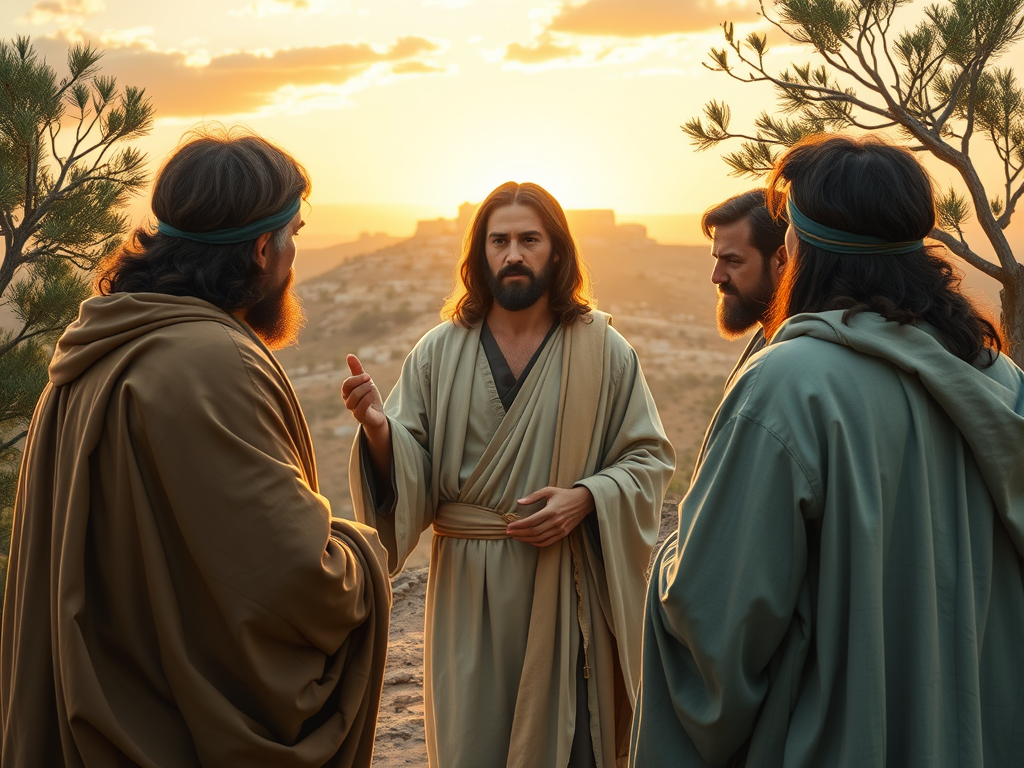
As Jesus was leaving the Temple grounds, his disciples came along and wanted to take him on a tour of the various Temple buildings. 2 But he told them, “All these buildings will be knocked down, with not one stone left on top of another!” 3 “When will this happen?” the disciples asked him later, as he sat on the slopes of the Mount of Olives. “What events will signal your return and the end of the age?” 4 Jesus told them, “Don’t let anyone fool you. 5 For many will come claiming to be the Messiah and will lead many astray. 6 When you hear of wars beginning, this does not signal my return; these must come, but the end is not yet. Matthew 24:1-6
The Hebrew Bible and Jewish tradition referred to a future era of divine fulfilment, the Messianic Age. This period was envisioned as an age of universal peace, harmony, and the reign of the Messiah, where evil will be eradicated, and the knowledge of the Creator will be widespread.
That’s why Jesus and the disciples along with the Jews expected a future era which was referred to as ‘the age to come’, contrasting with their current age.
In Christian tradition, the “age to come” is similarly associated with the return of Jesus Christ and the establishment of the Kingdom of God.
For Jews, the idea of the Messianic Age is deeply rooted in the Hebrew Bible, particularly in the books of the prophets. Isaiah speaks of a time when “nation will not lift sword against nation” and “they will no longer study warfare. Isaiah 2 speaks of a time when the Mount of the Lord’s house will be established as the highest of the mountains, and all nations will stream to it, seeking peace and learning the ways of the Lord.
Isaiah 11 describes the Messianic Age as a time when a shoot will come forth from the stump of Jesse (David’s father), and a branch from his roots will bear fruit.
This figure, the Messiah, will be filled with the Spirit of the Lord, bringing wisdom, understanding, counsel, might, knowledge, and the fear of the Lord.
The Messianic Age is also described in Isaiah 32, where the Spirit of the Lord will be poured out on the people, leading to a time of peace, security, and prosperity. The passage emphasizes that the earth will be filled with the knowledge of the Lord, as the waters cover the sea.
In addition, Isaiah 42 highlights the Messiah’s role in bringing justice to the nations. He will not falter or be discouraged until he establishes justice on earth, and the nations will look to him for guidance and hope.
Isaiah 65:17-19. “For behold, I create new heavens and a new earth, and the former things shall not be remembered or come into mind. But be glad and rejoice forever in that which I create; for behold, I create Jerusalem to be a joy, and her people to be a gladness. I will rejoice in Jerusalem and be glad in my people; no more shall be heard in it the sound of weeping and the cry of distress.
These Old Testament passages collectively paint a picture of the Messianic Age as a time of peace, justice, and the presence of God’s Spirit, where the Messiah will reign and bring about a new era of harmony and righteousness.
Now consider these passages from the New Testament:
Revelation 21:4 He will wipe away every tear from their eyes, and death shall be no more, . . . . . nor pain anymore, for the former things have passed away
Jesus would have expounded to the disciples many Old Testament scriptures that pointed to end times. Also He would have given them His own direct teachings. Matthew recorded many of these He gave them before the Olivet discourse. See Matthew 4:17, 5:17, 10:23, 16:17-18, 9:36-43, 13:47-50, 22:2-14.
That’s an error which the famed scholar C S Lewis made. Lewis blatantly said Jesus was mistaken! He said Jesus failed to come back in the End time as he said he would. (See Lewis’ book “The World’s Last Night”).
That is also the mistaken view of many liberal scholars, atheists and Islamic writers.
So, please do not make this mistake.
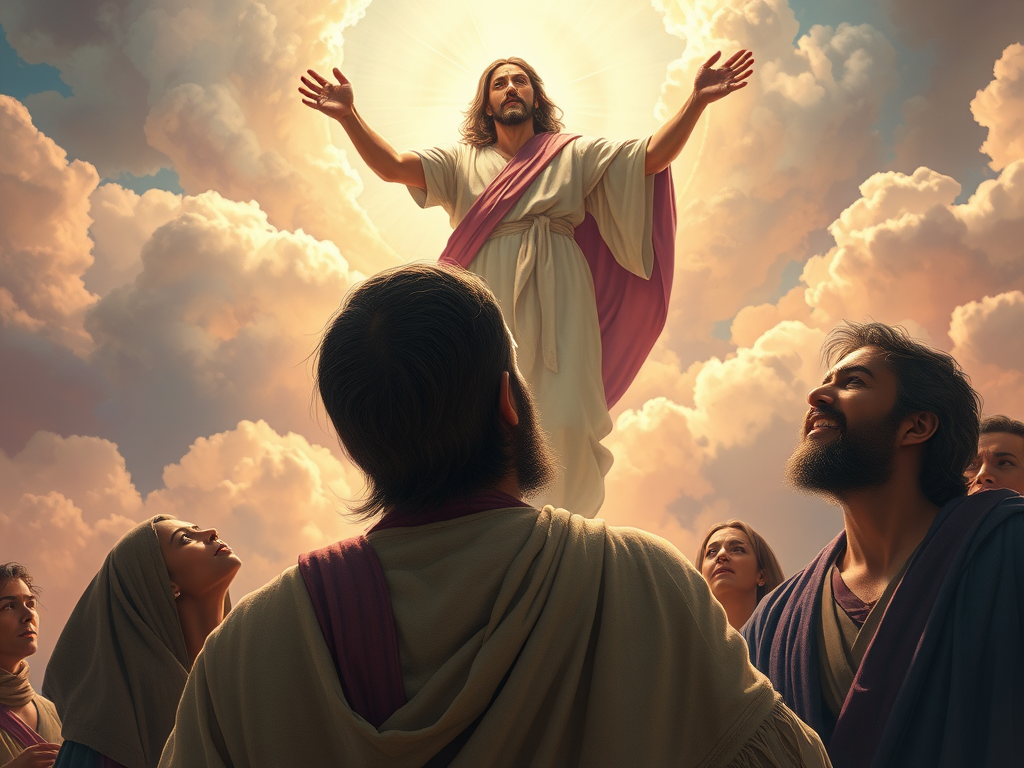
Jesus was not mistaken and he cannot lie. But true to his promise, he returned as he said he would before many of his followers passed away (Matthew 10:23, 16:17-18 and 24:34.
Posted in Bible Study, Covenant, new, old, Eschatology
Tagged Bible, C S Lewis, christianity, end times, human attempts, New Covenant, religion, The End, theology
Paul anticipated the imminent resurrection of the dead. He knew for certain that the resurrection would occur at Jesus’ coming. The resurrection he knew that would occur on that day. He was also convinced this would occur within the lifetime of many of Jesus’ disciples. (see Matthew 24:34).
Paul called this ‘the blessed hope’.
The concept of “the blessed hope” in the New Testament refers to the confident expectation and assurance of the return of Jesus Christ. This hope was not merely wishful thinking for them. It was a divine certainty or joyful assurance.
Paul wrote to the Corinthians about this: It will happen in a moment, in the blink of an eye, when the last trumpet sounds; for the trumpet will sound, and the dead will be raised imperishable, 51 Behold, I tell you a mystery; we will not all sleep, but we will all be changed, and we will be changed. 53 For this perishable must put on the imperishable, and this mortal must put on immortality. 54 But when this perishable will have put on the imperishable, and this mortal will have put on immortality, then will come about the saying that is written, “Death is swallowed up in victory.” (1 Corinthians 15: 51-54)
Paul had this blessed hope that he would see that day. He did not expect it to come in some distant future. He believed Jesus’ words given to the disciples on the Mt Olivet (Matthew 24).
In his letter to the Philippians, a letter rejoicing in the blessed hope:
For to me, living means living for Christ, and dying is even better. 22 But if I live, I can do more fruitful work for Christ. So I really don’t know which is better. 23 I’m torn between two desires: I long to go and be with Christ, which would be far better for me. 24 But for your sakes, it is better that I continue to live. ( Philippians 1:21-24)
Paul longs to go and be with Christ, which would be far better. What could be better than that? To be with Christ! Notice his supreme confidence.
He goes on to urge his readers to hold firmly to the word of life; then, on the day of Christ’s return, I will be proud that I did not run the race in vain and that my work was not useless. (Philippians 2:16)
Note how certain Paul was of the coming of Christ being imminent. Was he mistaken? People who are still waiting for His return must admit they are wrong or face the challenge that Jesus and the apostolic writers were mistaken.
In Philippians 3:10-11, Paul is emphatic about experiencing resurrection from the dead: I want to know Christ and experience the mighty power that raised him from the dead. I want to suffer with him, sharing in his death, so that one way or another I will experience the resurrection from the dead!
See also 1 Thessalonians 1:10, . . they speak of how you are looking forward to the coming of God’s Son from heaven—Jesus, whom God raised from the dead. And 1 Thessalonians 2:9: After all, what gives us hope and joy, and what will be our proud reward and crown as we stand before our Lord Jesus when he returns? It is you!
Titus 2:11-12. For the grace of God has been revealed, bringing salvation to all people. 12 And we are instructed to turn from godless living and sinful pleasures. We should live in this evil world with wisdom, righteousness, and devotion to God, 13 while we look forward with hope to that wonderful day when the glory of our great God and Saviour, Jesus Christ, will be revealed.
He emphasised that believers are to live godly lives in the present while waiting for this blessed hope, which is the glorious appearing of Jesus Christ
He also mentions this future event in other passages, reinforcing the significance of this blessed hope. See 2 Timothy 4:7-8: I have fought the good fight, I have finished the race, and I have remained faithful. And now the prize awaits me—the crown of righteousness, which the Lord, the righteous Judge, will give me on the day of his return. And the prize is not just for me but for all who eagerly look forward to his appearing. y
Not only Paul but also Peter. According to his first letter, 1 Peter 1: 5-9:
5 And through your faith, God is protecting you by his power until you receive this salvation, which is ready to be revealed on the last day for all to see.
Again, note Peter’s certainty that this great hope is their future i.e., his readers’ salvation is soon to happen. He said their salvation will be accomplished on that glorious day of His return.
Further, He confirmed to his readers: Put all your hope in the gracious salvation that will come to you when Jesus Christ is revealed to the world. 1 Peter 1:13
Such passages emphasise the importance of this hope. It was imminent for the life of First Century believers. This hope was central to the Christian faith, providing a foundation for both present living and future expectations.
They were not to be mistaken!
For us today, the blessed hope is not a future event as it was for the early believers. It is a present reality, as believers experience the assurance of salvation through our relationship with Jesus Christ. We know that to be with Christ is far better than remaining here—our resurrection! Yet it is important for us to remain, so we can bear witness to Him and make disciples until He calls us home .